Description
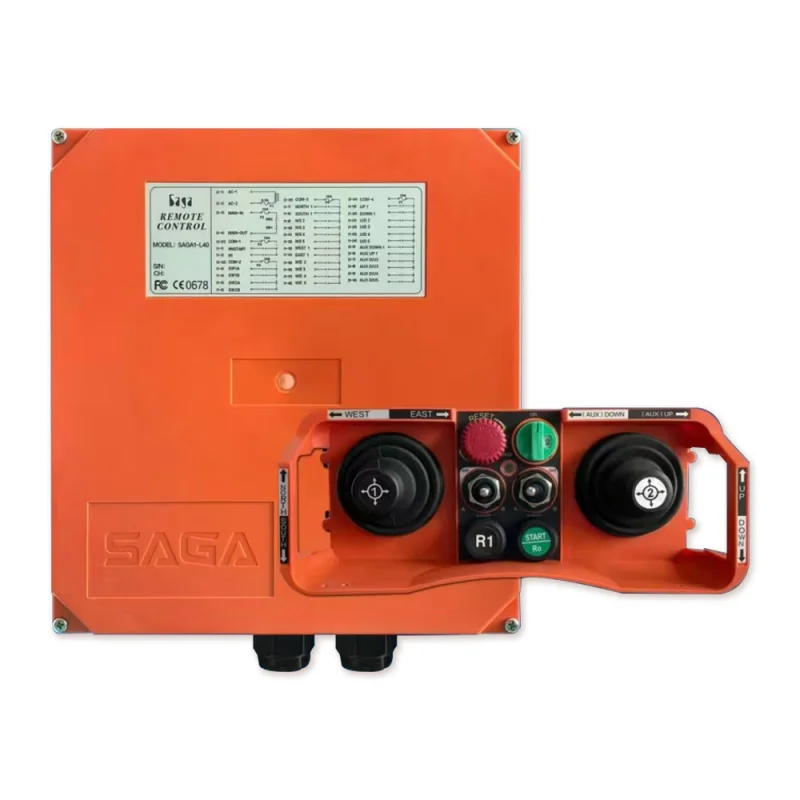
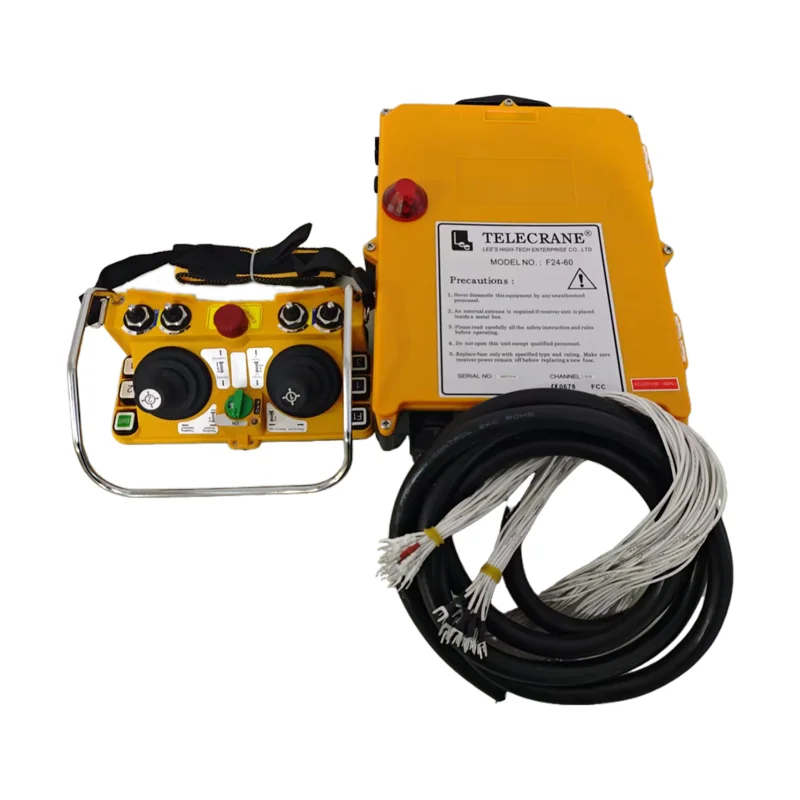
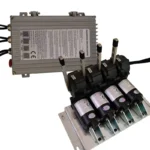
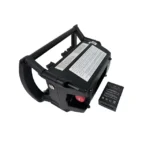
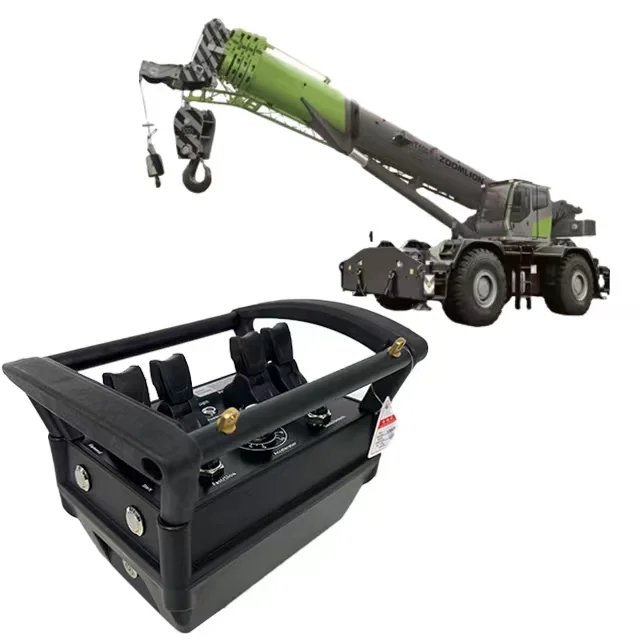
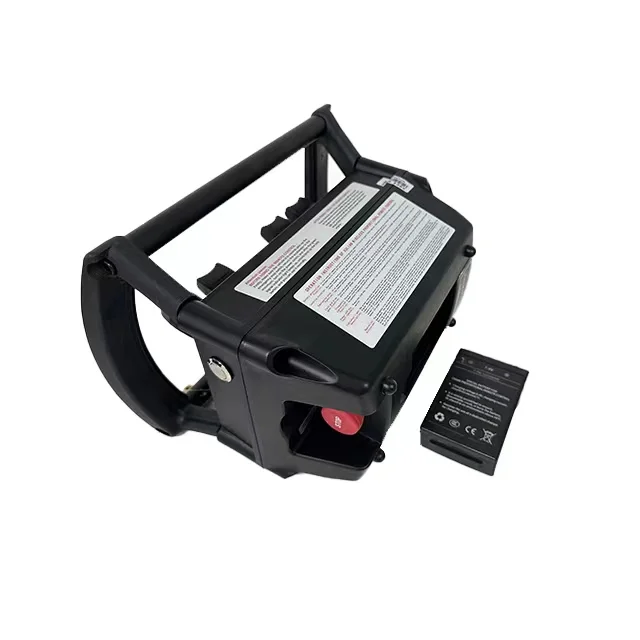
A truck mounted crane wireless remote control lets the operator leave the lever bank beside the mast and work from where the load and the ground are both visible. The kit is designed as a retrofit: a DC actuator is bolted onto the existing manual valve handle, so the hydraulic circuit is not opened, no oil is drained, and the crane keeps its original valve block.
That retrofit approach is the reason this system suits fleets that are already in service. Nothing on the hydraulic side is re-engineered, the manual lever remains available, and the conversion is a mechanical and electrical job rather than a hydraulic one.
■ Vehicles and machines this kit is fitted to
The system is built for cranes and attachments that are operated from a lever bank at the base of the mast or on the deck:
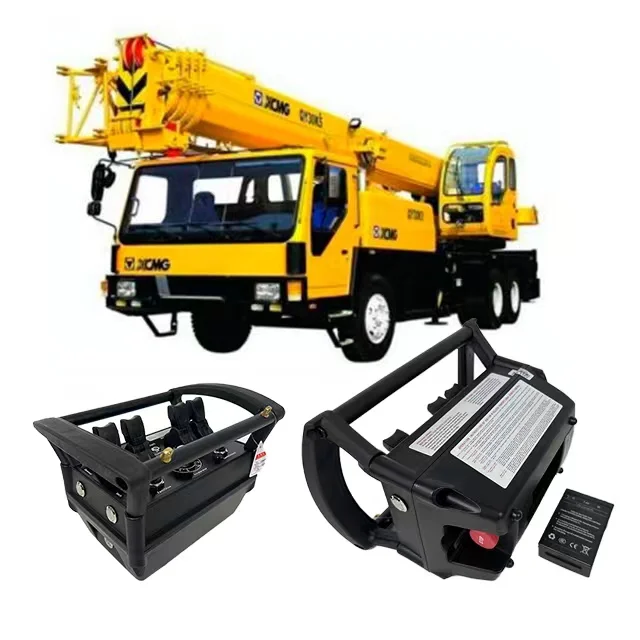
- Lorry-mounted and knuckle-boom cranes on flatbed, tipper and service trucks where the operator currently stands at the lever bank.
- Recovery and breakdown vehicles with winch and boom functions that have to be worked while the operator watches the casualty rather than the levers.
- Skip loaders and hook lifts, where the operator needs to see the container and the ground at the same time.
- Municipal and utility vehicles with hydraulic outriggers, booms or grabs operated from a fixed lever position.
■ Kit contents and specification
| Control method | Proportional wireless control of the hydraulic valve via bolt-on DC actuator |
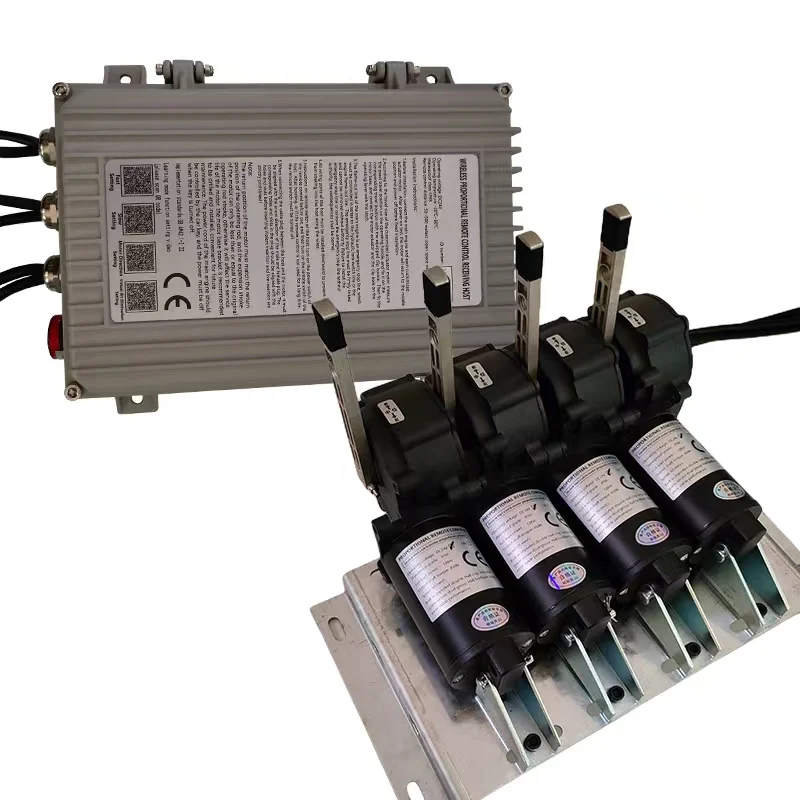
| Actuator mounting | Bolted to the existing manual valve handle — no hydraulic modification, no oil drain |
| Manual operation | Retained; the lever bank stays usable with the actuator in place |
| Response | Smooth, infinitely variable speed adjustment at the joystick, without sudden valve steps |
| Wireless range | Up to 500 m in open conditions |
| Emergency stop | Integrated on the transmitter |
| Supply voltage | 12 V or 24 V DC vehicle supply |
| Ingress protection | IP67 / IP68 on the outdoor-mounted parts |
| Environment | Built for construction sites, yards and unpaved ground |
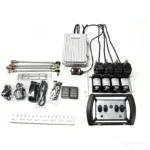
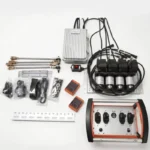
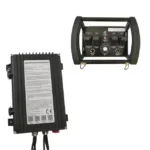
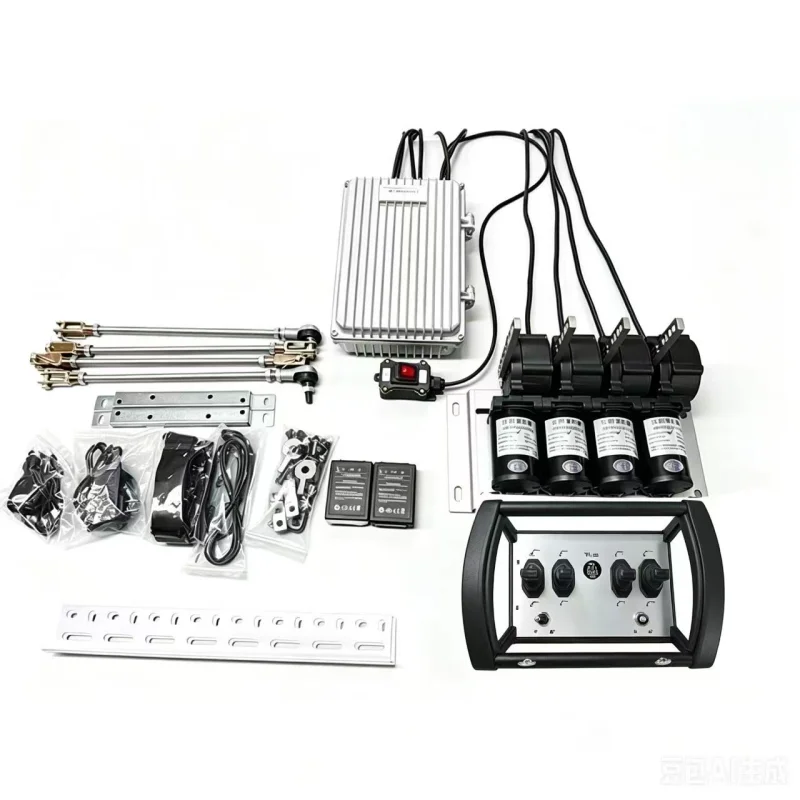
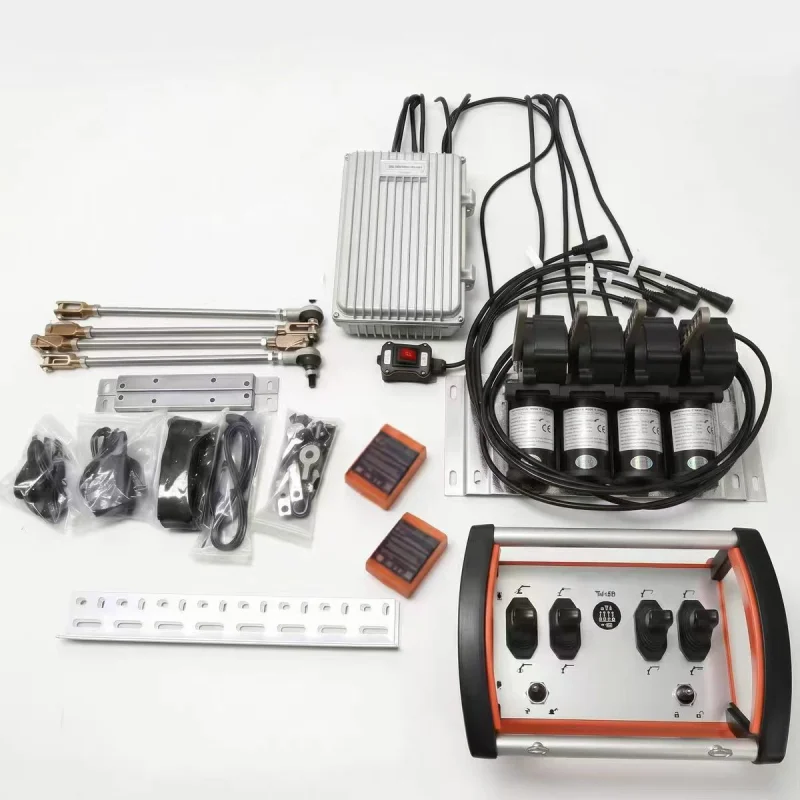
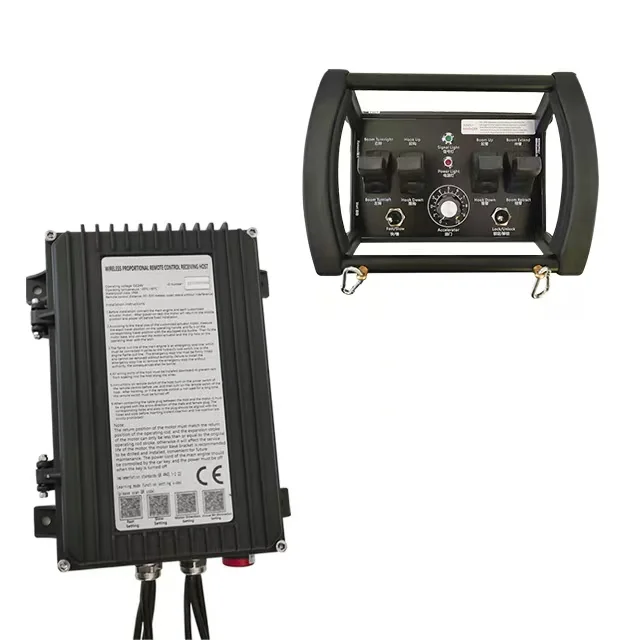
| Typical kit | Transmitter, receiver, actuator set, mounting hardware, wiring harness, manual |
Actuator count and joystick layout follow the number of hydraulic sections to be controlled, so the kit is assembled per vehicle rather than supplied as one fixed package.
■ Planning a conversion: what to decide before ordering
A truck-mounted crane retrofit is a small project rather than a product purchase. These five decisions determine what ships.
- Count the valve sections that need remote control. Each section to be operated from the transmitter needs its own actuator. Cranes that are remote-controlled for the main boom functions only can leave outriggers and stabiliser legs on manual control, which reduces the kit and the cost — decide this first, because it sets everything else.
- Identify the valve type and handle geometry. The actuator bolts to the existing handle, so the handle shape, travel and the mounting space around the lever bank have to match. Send photographs of the lever bank with a tape measure in shot; that single step prevents most of the fitting problems that arise on site.
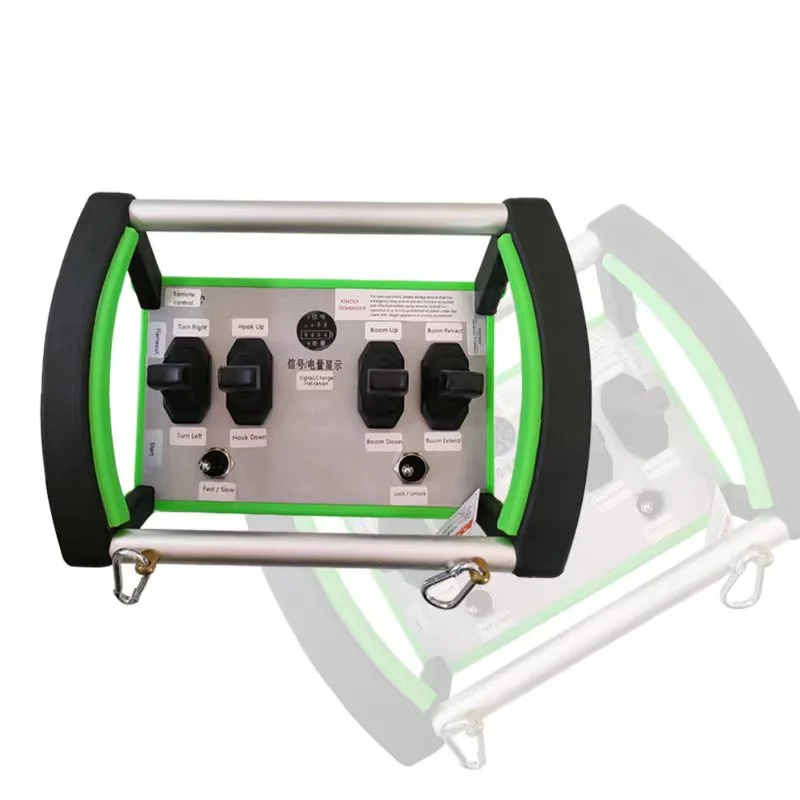
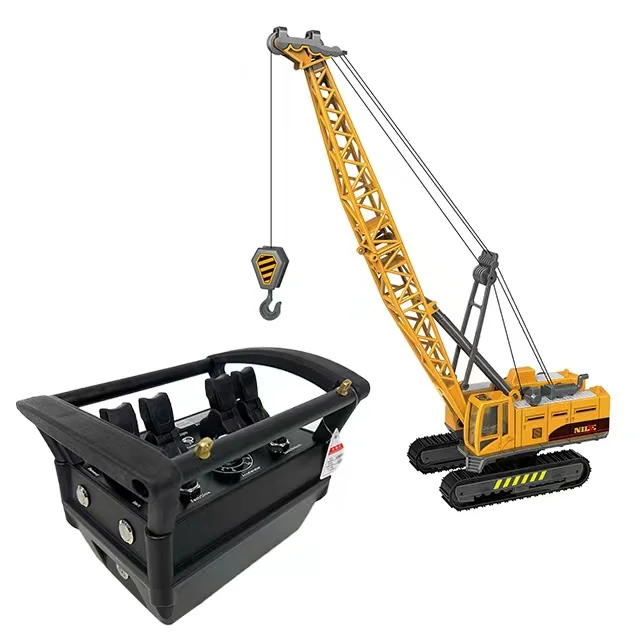
- Decide the transmitter layout. A joystick transmitter is the right choice where the operator needs proportional, blended movement; a paddle or lever transmitter suits operators who prefer a separate control per section. Both are available for the same receiver, and the choice is about the operator’s working habit rather than about the machine.
- Check the vehicle supply. The system runs from 12 V or 24 V DC. Confirm the supply available at the mounting position and allow for the fact that vehicle electrical systems are electrically noisy — the receiver should be fed from a circuit that is not shared with the alternator or with radio equipment, and this is worth settling during installation planning rather than after.
- Agree what happens when the link drops. Decide the fail-safe behaviour of every actuator if the transmitter is switched off, the emergency stop is struck or the radio link is lost. On a crane holding a load, the safe behaviour for a boom section and for a winch may be different, and the receiver logic should be set to match before the vehicle goes back into service.
■ Truck mounted crane wireless remote control price range
Indicative export prices per kit, ex-works Zhejiang. Because the kit is assembled per vehicle around the number of actuators, treat these as planning bands rather than fixed package prices.
| Kit configuration | Indicative price (USD) |
| Single-actuator kit, one hydraulic section | 180 – 420 |
| Dual-actuator kit, two sections | 280 – 620 |
| Four-actuator kit, four sections | 460 – 980 |
| Additional actuator, added later | quoted per unit |
| Spare transmitter | quoted per unit |
Price tracks the actuator count more than anything else, followed by transmitter type (a proportional joystick transmitter costs more than a paddle unit), harness length, and whether the receiver has to be configured to a specific fail-safe sequence. Adding actuators at the time of the original order is materially cheaper than extending the system afterwards, so it is worth deciding the final section count even if some actuators are fitted later.
■ Ordering, fitting and after-sales
Information to send with the enquiry
The crane make and model, the number of hydraulic sections to be controlled, photographs of the lever bank with dimensions, the vehicle supply voltage, the preferred transmitter type, the quantity of vehicles to be converted, and the intended fail-safe behaviour. For fleet conversions, list the vehicles with their section counts — a mixed fleet is assembled as one project so that the transmitter layouts and receiver logic stay consistent across the vehicles.
Supply, lead time and fitting
Individual kits are quoted from 1 set, and fleet conversions from 5 kits. Typical lead time is 15–25 working days for a single kit and 25–40 working days for a fleet order with per-vehicle actuator sets. Kits ship in export cartons with mounting hardware, harness and manual included. The conversion itself is a mechanical and electrical job: mount the actuators, terminate the harness, set the receiver logic, then test each section through its full travel with the manual lever available as a fallback throughout.
Warranty and support
Standard twelve-month warranty against manufacturing defects, with actuators, harnesses and mounting hardware covered under the same terms and wear items excluded. Technical support covers actuator mounting, harness routing and receiver configuration. Spare actuators and transmitters can be supplied against the original kit specification, so a second vehicle can be added later using the same layout and logic.
■ About IEHC
Zhejiang iehc Electrical Technology Co., Ltd was founded in 2003 and manufactures in Liushi Town, Yueqing, Zhejiang — the low-voltage electrical cluster that supplies much of China’s crane and hoist industry. The plant covers 1,500 sqm with 50+ staff and 20+ sets of production and testing equipment, and the company operates as an integrated manufacturer covering R&D, production, sales and service. Six patents, twelve trademarks and thirteen qualification certificates support the control product lines, and every unit is inspected before shipment rather than batch sampled.
Truck-crane conversions sit in the custom-solution side of the business, where the kit is assembled around what is already on the vehicle rather than the vehicle being adapted to a catalogue product. That is the same approach used on the crane control lever remote system, and it is the reason photographs and dimensions matter more here than in most product enquiries.
Related wireless systems are listed under the joystick remote control range and industrial remote control systems.
Send photographs of the lever bank with dimensions, the crane model, the section count and the vehicle supply voltage through the contact page. We will confirm the actuator set and return a firm price. Ordering and warranty questions are covered on the IEHC FAQ page.
FAQ
Will the kit fit my existing valve, or does the valve block have to be replaced?
The actuators bolt onto the existing manual valve handles, so the valve block, the hydraulic circuit and the oil charge all stay as they are — that is the core of the design. What has to match is the handle geometry and the space around the lever bank: the actuator needs a mounting face and clearance through the handle's full travel. Photographs of the lever bank with a tape measure visible, together with the crane make and model, are enough for us to confirm fit before the kit is assembled.
How many actuators do I need?
One per valve section that has to be operated from the transmitter. A typical knuckle-boom conversion covers the boom lift, the boom extension and the winch or rotator, with outriggers left on manual levers, which usually means two to four actuators. Sections that are rarely used or that are safer on manual control can be left out deliberately; the receiver is built for the number of actuators ordered, so decide the final count at order stage rather than adding to it later.
Can the crane still be operated by hand after fitting?
Yes. The manual lever remains in place and usable, so the machine can still be worked if the transmitter is unavailable or the vehicle battery is low. That matters for fleet operations, where a crane that cannot be moved without its transmitter becomes a vehicle that cannot be dispatched. Confirm the hand-over arrangement with the installer: in normal service the actuator should not obstruct the lever, and the changeover should be something an operator can do without tools.
What happens if the radio link is lost while a valve is open?
The receiver is configured to return the outputs to their safe state when the link drops, the transmitter is switched off or the emergency stop is pressed, so the actuators stop holding the valve open. Because the safe state is not the same for every section — a winch and a boom section usually behave differently on a crane holding a load — the behaviour is confirmed per section before the kit is built and the logic is set accordingly. It should be tested on the individual vehicle before that vehicle returns to normal service.
Does the system work on both 12 V and 24 V vehicles?
Yes, the kit is designed for 12 V and 24 V DC vehicle supplies, which covers most light and medium commercial chassis. Two installation points are worth attention: feed the receiver from a dedicated circuit rather than one shared with the alternator or two-way radio, and confirm the supply voltage at the mounting position rather than assuming it is nominal, since vehicle systems vary under load. Outdoor-mounted components are rated IP67 / IP68, so rain and washdown are not a concern.
Request Quote
Tell us your specifications, quantity, or application scenario and we will reply with a tailored quote.