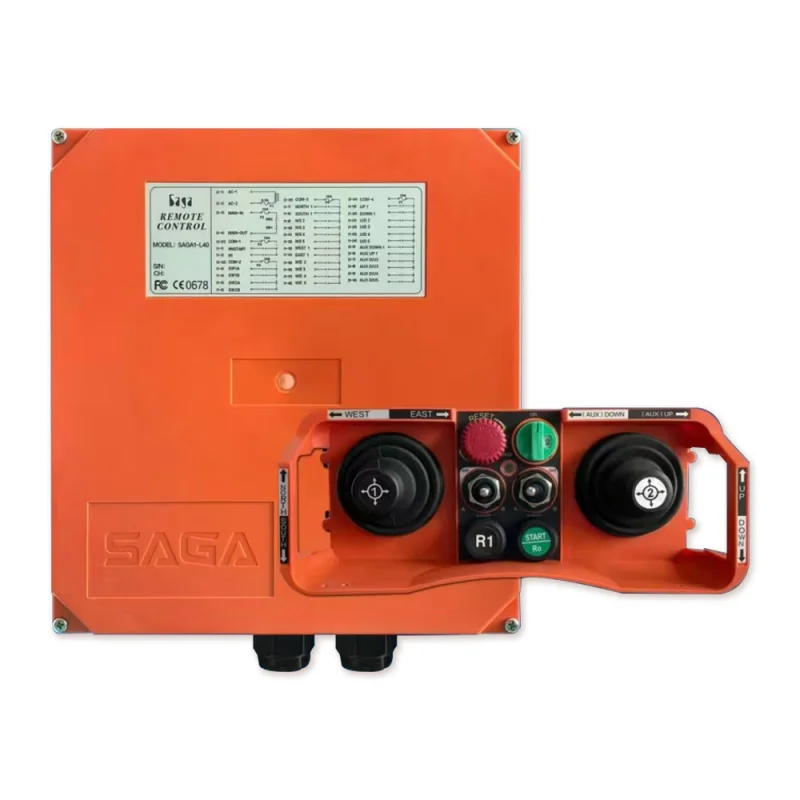
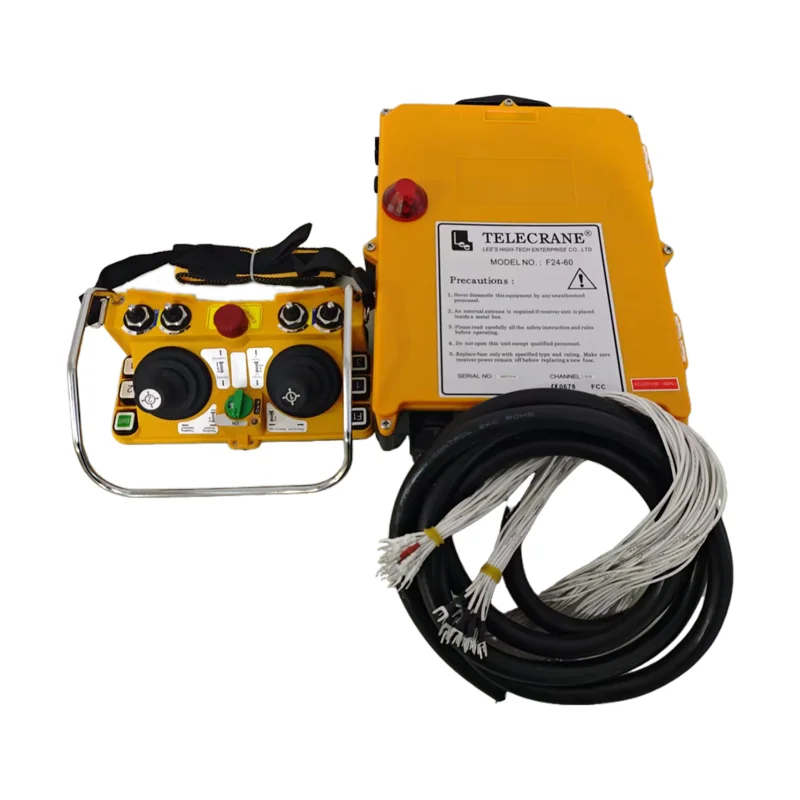
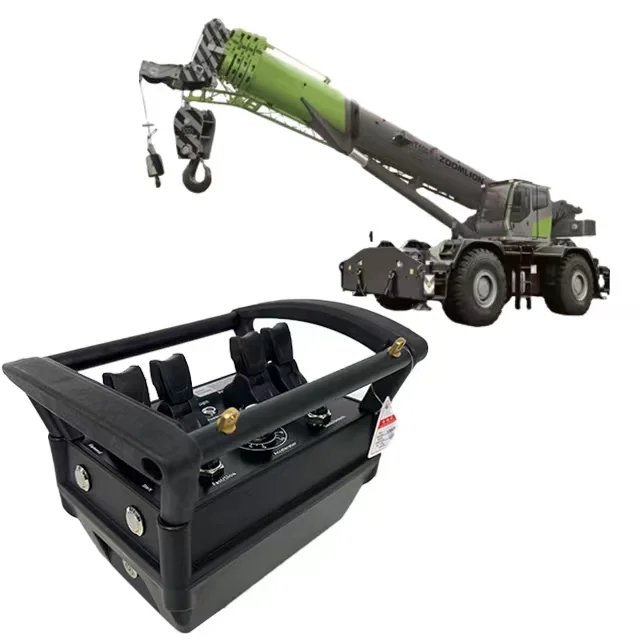
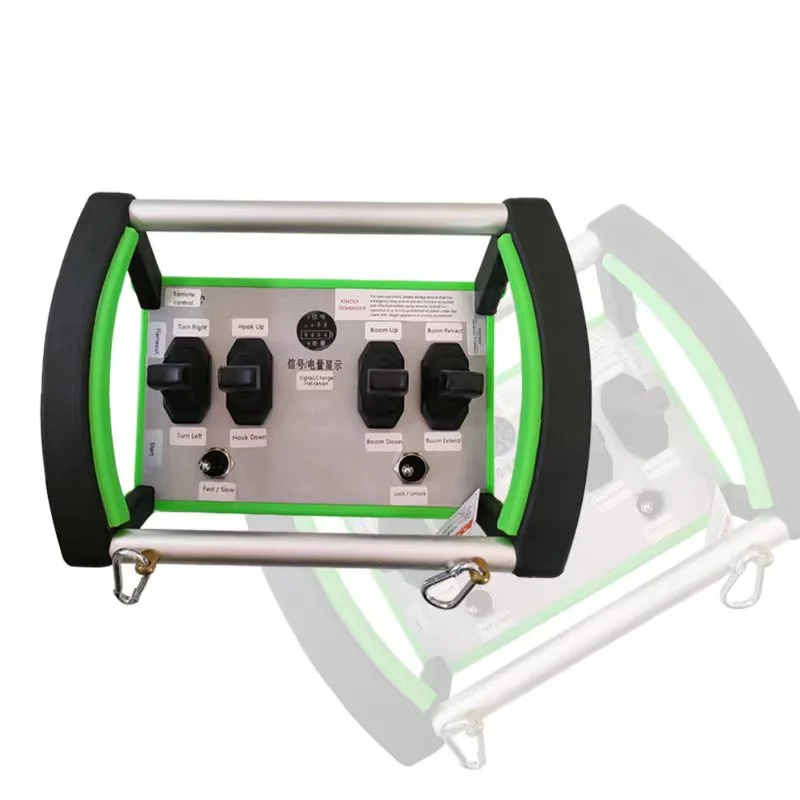
A joystick remote controller must match both the operator’s intended movements and the machine’s electrical or hydraulic interface. Define each axis carefully before choosing the transmitter and receiver.
1. Map every joystick axis
For each axis, specify direction, travel angle, spring return, center position, detents and whether movements can be combined. State whether the joystick controls one mechanism or several coordinated machine motions.
2. Choose discrete, stepped or proportional control
Clarify whether each direction needs simple on/off commands, multiple speed steps or a continuously variable signal. For proportional functions, provide the required signal range, neutral behavior, ramping expectations and downstream controller or valve interface.
3. Define auxiliary controls
List emergency stop, enable or dead-man control, start, horn, selectors, push buttons and status indicators. Separate frequently used functions from setup or maintenance controls to improve usability.
4. Specify the receiver interface
Provide receiver supply voltage, output type, communication interface where applicable and a machine input/output diagram. Identify interlocks and functions that must never be active together.
5. Review ergonomics
Consider one-hand or two-hand operation, glove use, transmitter weight, carrying strap or harness, joystick resistance and the operator’s viewing position. The layout should support controlled input without unnecessary fatigue.
6. Evaluate radio range and environment
State the required operating distance and describe obstacles, steel structures, interference sources, weather, dust, vibration and temperature. Receiver and antenna placement can materially affect performance.
7. Define safe-state behavior
Specify the required response to released controls, loss of signal, low battery, transmitter shutdown and emergency stop. A qualified controls engineer must validate these behaviors during integration and commissioning.
Information to send IEHC
Send an axis map, function list, proportional signal details, receiver voltage and outputs, machine schematic, operating range, environmental conditions, ergonomic preferences and required quantity.