Description
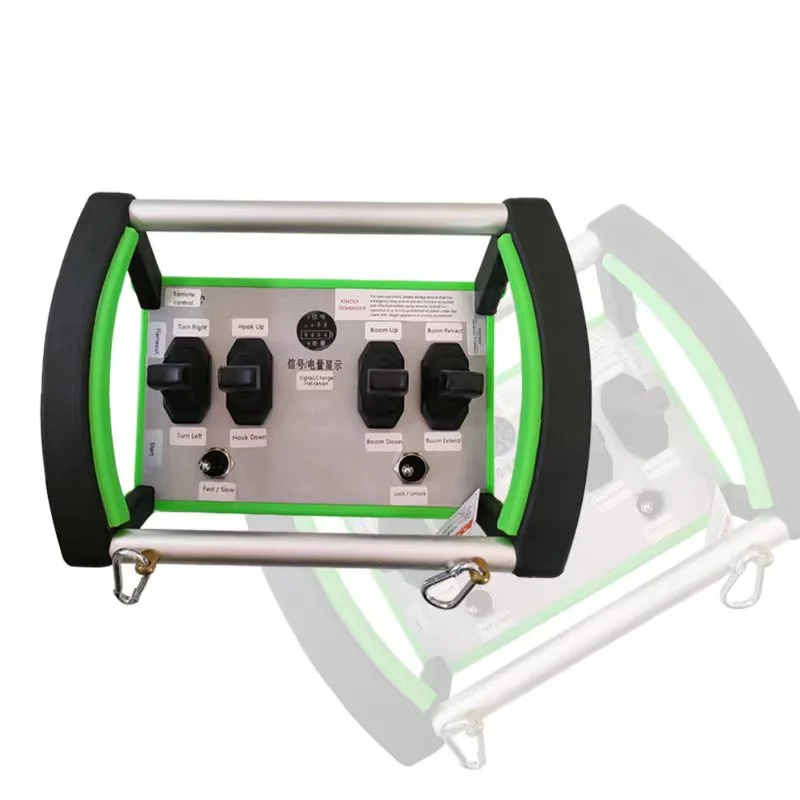
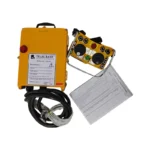
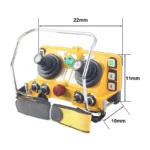
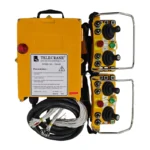
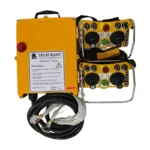
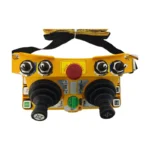
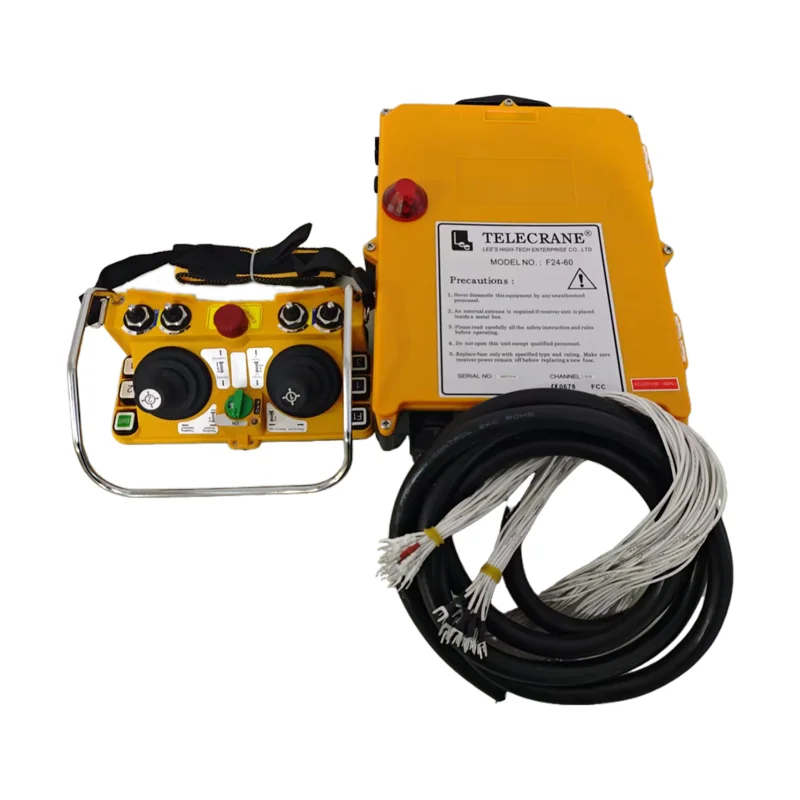
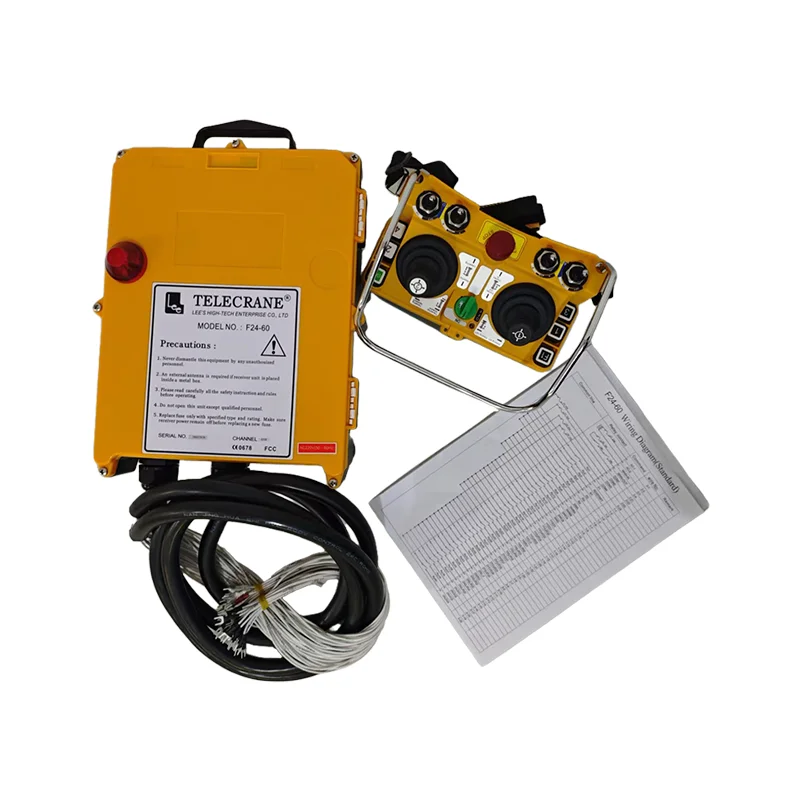
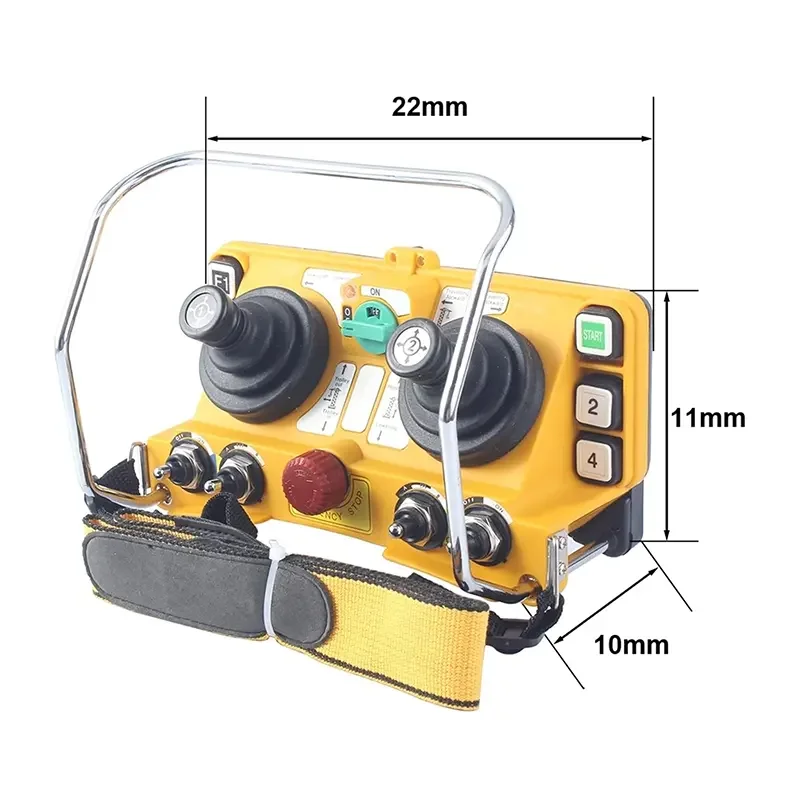
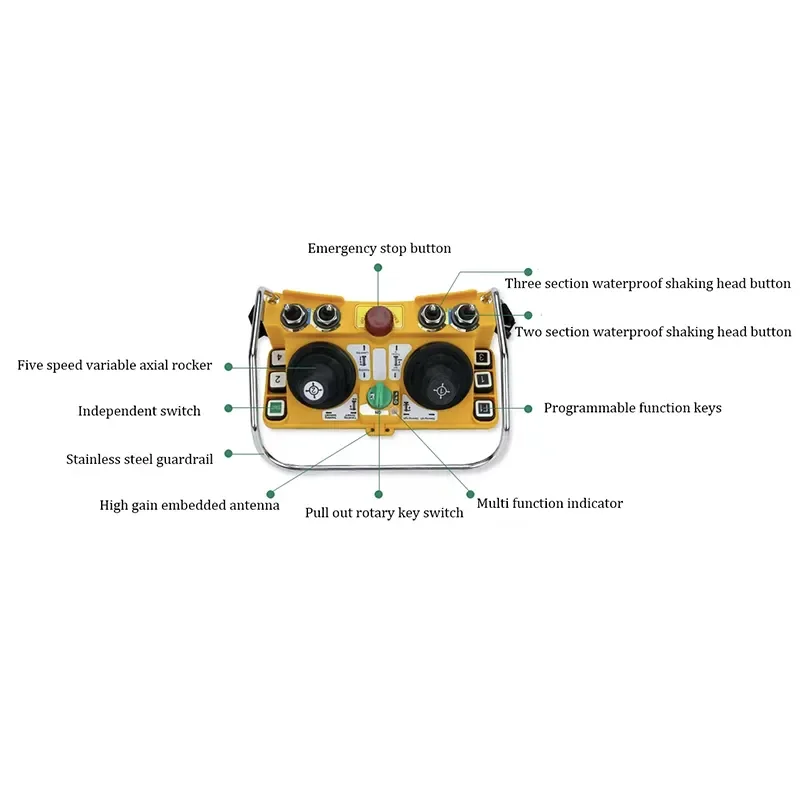
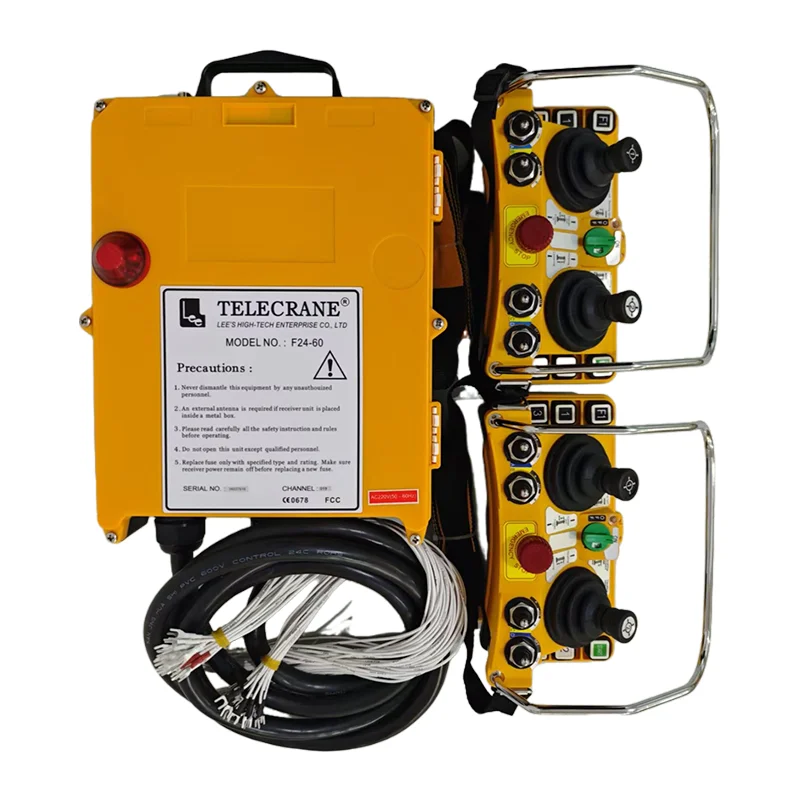
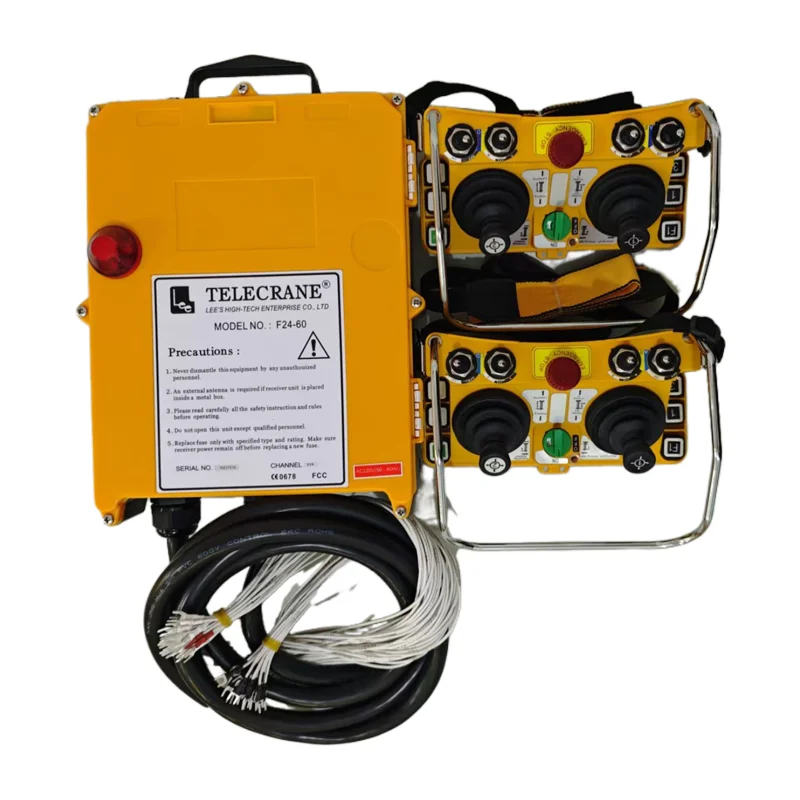
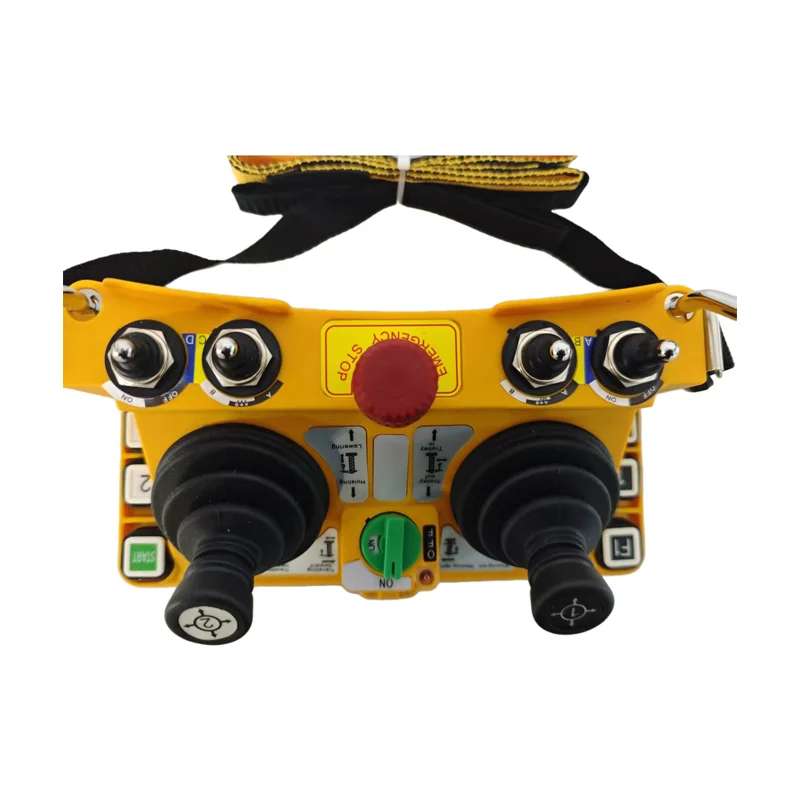
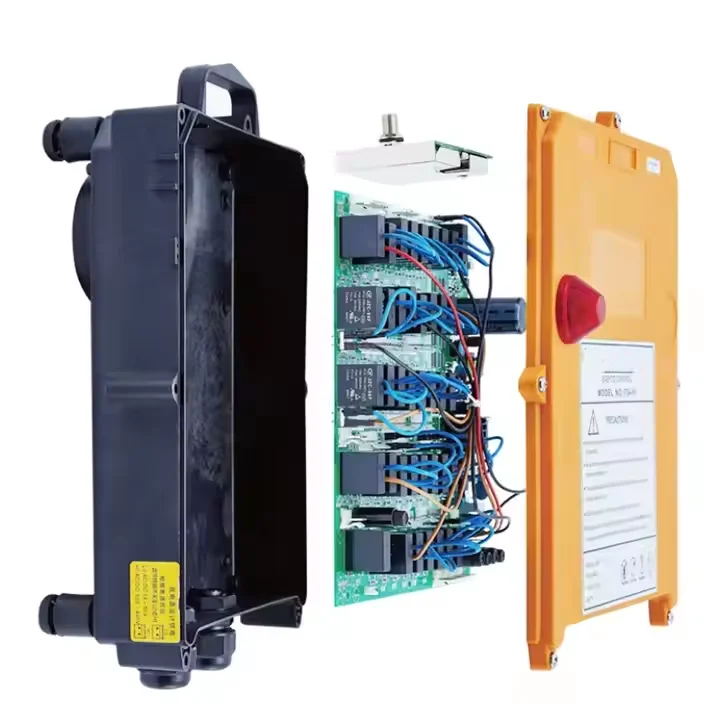
F24-60 joystick remote control is a belly-box radio system built around two five-step joysticks. Instead of pressing a direction button for each motion, the operator moves a stick and the receiver closes its relay outputs one step at a time as the stick travels — which is what makes smooth multi-axis crane and concrete-pump work possible from a remote position.
It is the model to look at when a machine has more than four motions, when two functions have to be ramped together, or when a tower-crane operator needs a harness-supported box rather than a hand-held unit.
■ Where the F24-60 joystick remote control is used
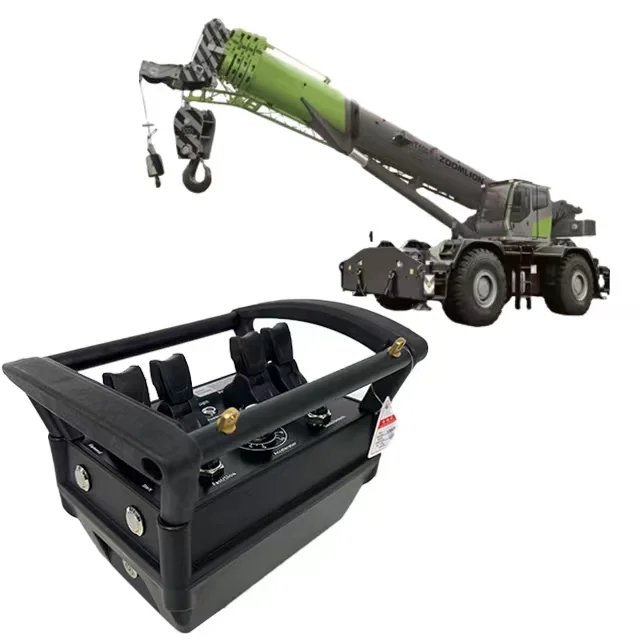
The dual-stick layout suits compound movements — slewing while travelling, or booming and booming-down while rotating. Typical installations are tower cranes and gantry cranes with four or more motions, concrete boom pumps where the boom sections have to be blended, heavy knuckle-boom and lorry loaders, and automated handling lines where two axes must move in step.
Because the box is carried on a shoulder harness at waist height, both hands stay free and the load remains visible throughout the move. On tower cranes this is the main reason operators prefer a belly-box over a pendant or a compact hand transmitter.
■ Transmitter and receiver data
Transmitter
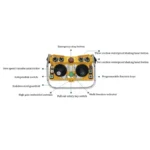
| Controls | Two self-centring joysticks, five detented steps per direction, four axes in total |
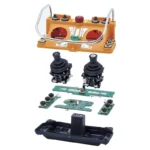
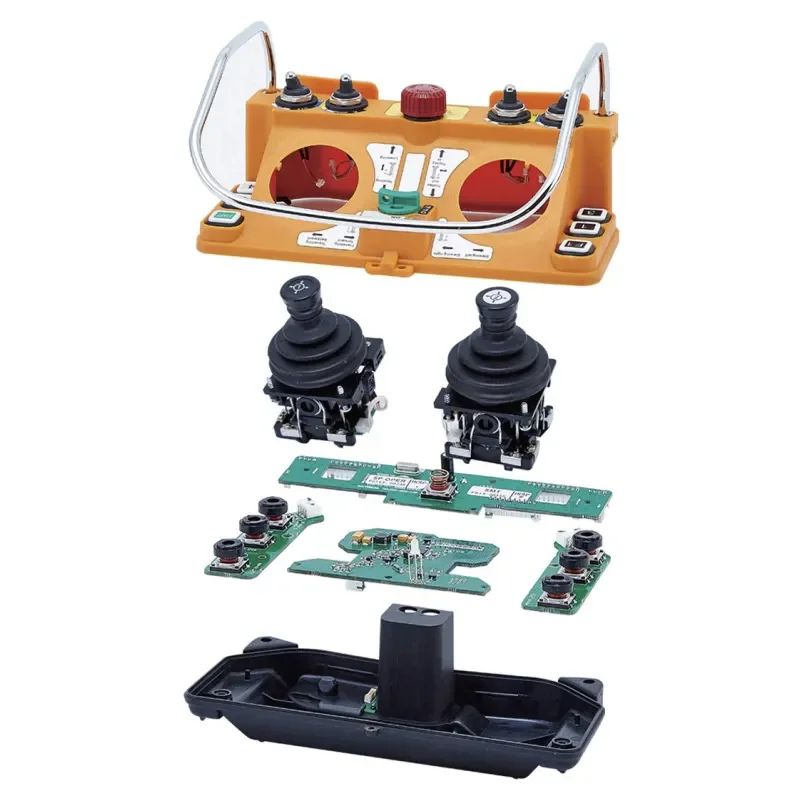
| Housing | Glass-fibre reinforced nylon, shock resistant, acid resistant |
| Ingress protection | IP65 |
| ID code | 32-bit, over 4.3 billion combinations, with Hamming code error correction |
| Self-diagnosis | Safety circuit shuts the system down when a hardware fault is detected |
| Operating temperature | −35 °C to +80 °C |
| Carrying method | Belly-box with shoulder harness |
Receiver and system
| Control radius | Up to 100 m in open plant conditions |
| Receiver input voltage | F24 wide-voltage platform — confirm the exact AC or DC rating for your panel at quotation |
| Outputs | Relay outputs assigned step by step in software; the relay count for a given logic is fixed at order |
| Pre-delivery testing | 48-hour continuous operation test and structural impact assessment on every unit |
| Compliance | CE and FCC compliant construction |
■ Stepped joystick or simple button control — which does your machine need?
The single most common misunderstanding about the F24-60 is what “five-step” means. Work through the following before you specify it.
- Decide whether the machine needs ramped travel or just full-speed travel. A stepped joystick adds intermediate speed stages. If your drives are single-speed contactors with no intermediate stage, the extra steps cannot be used and a button transmitter such as the F24-10S/10D 10-button remote does the same job for less money.
- Check what the receiver actually outputs. The F24-60 receiver switches relay contacts. Each step of joystick travel closes a different contact. It is not an analogue output: if your proportional valve or drive expects a 0–10 V or 4–20 mA command, you need a proportional-output receiver or a signal converter between the receiver and the valve amplifier, and that requirement has to be settled before the receiver logic is programmed.
- Count the axes, not the buttons. Two joysticks give four independent axes of five-step travel. A four-motion tower crane maps directly onto them; a machine with six separate motions is usually better served by a high button count than by a joystick box.
- Confirm the operator’s posture. A belly-box is carried on a harness and held at waist height. If your operators work from a cabin or a fixed platform, or need to hold the unit in one hand while steadying a load, a hand-held transmitter is the better ergonomic fit.
- Settle the fail-safe behaviour at the same time as the logic. Decide what each axis should do when the transmitter is switched off, when the safety key is pulled or the emergency stop is struck, and when the radio link drops. Those decisions are programmed into the receiver, so they have to be agreed before the unit is built rather than after installation.
■ What drives the F24-60 joystick remote control price
Indicative export bands for a complete transmitter-and-receiver set, ex-works Zhejiang:
| Order size | Indicative unit price (USD) |
| 1 set | 385 – 680 |
| 2–4 sets | 360 – 640 |
| 5–19 sets | 335 – 600 |
| 20 sets and above | 305 – 560 |
The spread inside each band is wider than on a button model because the receiver is configured to order. Four factors account for most of it: the number of relay outputs the logic needs, whether programming and a function list have to be produced for your specific machine, whether a harness, spare battery set and spare transmitter are bundled with the set, and whether custom button or axis legends are required. A configuration that reuses a standard four-axis logic sits at the bottom of the band; a machine-specific relay map with documented programming sits at the top.
■ Lead time, packing and warranty terms
Placing the order
Send the machine type, the motion or axis list, the panel supply voltage, the required fail-safe behaviour for each axis, the quantity and any OEM requirement. For a configured receiver we also need the relay-to-function map, or a description of the machine sequence if you would rather we produce the map for you. Quotes are issued for 1 set upwards; custom logic and OEM branding are quoted from 3 sets.
Lead time and packing
Typical lead time is 7–15 working days where a standard logic is used, and 20–30 working days where the relay map is machine-specific or the transmitter is branded. Because the unit is programmed rather than merely assembled, the programming sheet and the final test record travel with the shipment. Each set is packed in an export carton with the transmitter, receiver, harness, batteries, programming record and wiring diagram; air and sea freight are both available depending on volume.
Warranty and after-sales
Units are covered by a standard 12-month warranty against manufacturing defects, excluding wear parts such as joystick assemblies and housings damaged in service. Technical support covers the wiring and commissioning questions that come up on site, and the receiver logic is recorded against the unit’s serial number, so a replacement transmitter can be supplied already matched to your existing receiver and relay map.
■ The engineering support behind this unit
IEHC has been building control equipment in Yueqing, Zhejiang since 2003, and configured products like the F24-60 are the reason the technical side of the business matters as much as the production side:
- Receiver logic is programmed in-house. A machine-specific relay map is produced and verified here, not left to the installer to work out from a generic diagram.
- Every unit is tested for 48 hours. Continuous operation testing and a structural impact check are performed before dispatch, so infant failures show up in the factory rather than on the crane.
- Documentation for the integrator. Wiring diagram, programming record, terminal referencing and commissioning notes are issued with configured units.
- Belly-box and harness hardware in the same order. Harnesses, spare battery sets, spare joystick caps and second transmitters can be added to a single shipment rather than sourced separately.
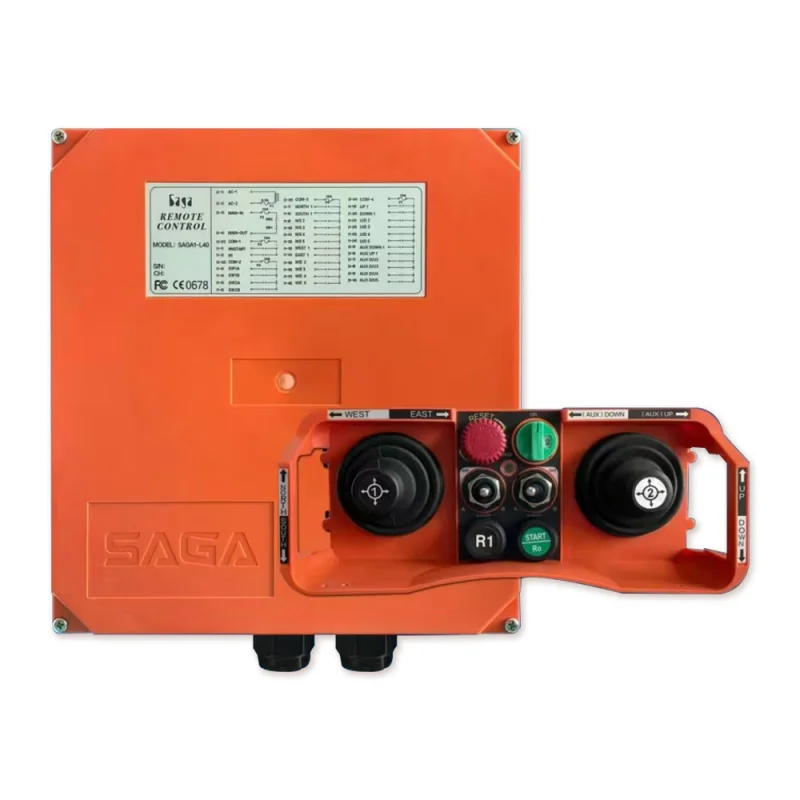
See the full joystick remote control range for other stick-based systems, or the SAGA1-L40 belly-box remote where up to 40 programmable relay outputs or a −45 °C operating limit is required.
Send the machine type, axis list, panel voltage and the fail-safe behaviour you need for each axis through our contact page. We will return a relay map, the output count it requires and a firm price. Ordering, packing and payment questions are covered on the IEHC FAQ page.
FAQ
Do the F24-60 joysticks give proportional, analogue output?
No. The joysticks are stepped, and the receiver responds by closing relay contacts — one contact per step of travel. That is enough to switch two-speed motors, VFD run stages or solenoid valve coils in sequence. If your proportional valve or drive needs a continuous analogue command such as 0–10 V or 4–20 mA, the receiver must be specified for proportional output, or a converter card fitted between the receiver and the valve amplifier. Tell us which you need before the relay logic is fixed.
How many separate motions can one F24-60 control?
It depends on the relay map rather than on the number of controls. Each joystick axis has five travel steps and every step can be assigned to a different output, so a well-planned map controls far more than four functions. The practical limit is the number of relay outputs the receiver is built with. Send us the motion list and we will confirm how many outputs that sequence requires.
Can it be used on a concrete pump instead of a crane?
Yes. Concrete boom pumps are one of the main applications, because boom sections have to be blended rather than moved one at a time. The programming differs from crane logic — boom sequencing and outrigger interlocks instead of hoist and travel interlocks — so specify the machine type when ordering.
What does the Hamming code add on top of the ID code?
The 32-bit ID code stops one transmitter from operating another system's receiver. Hamming code error correction is a separate protective layer: it detects and corrects corrupted bits in the transmitted signal, so a burst of electrical noise cannot turn a valid command into a different valid command. Both are transmitted continuously rather than only at the start of a command.
Can two F24-60 systems work side by side on the same site?
Yes. Each transmitter carries a unique factory-set ID, so receivers respond only to the unit they are paired with. Where several units work inside a small area — a single tower crane deck, for example — tell us the number of systems and we will assign frequencies so that no two adjacent units share a channel.
Is the belly-box available with a different harness or a spare transmitter?
Both can be added to the order. Harness and belt types, spare battery sets and pre-paired second transmitters are ordered as accessories alongside the set, which avoids a separate shipment later. A second transmitter paired at the factory is the usual choice for shifts that run continuously.
Request Quote
Tell us your specifications, quantity, or application scenario and we will reply with a tailored quote.