
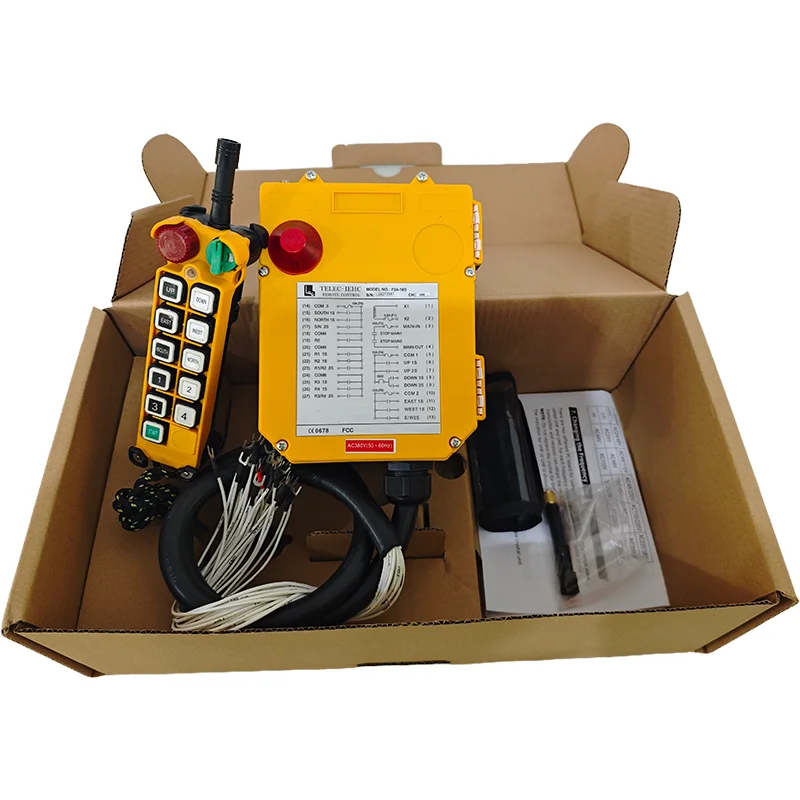
Description
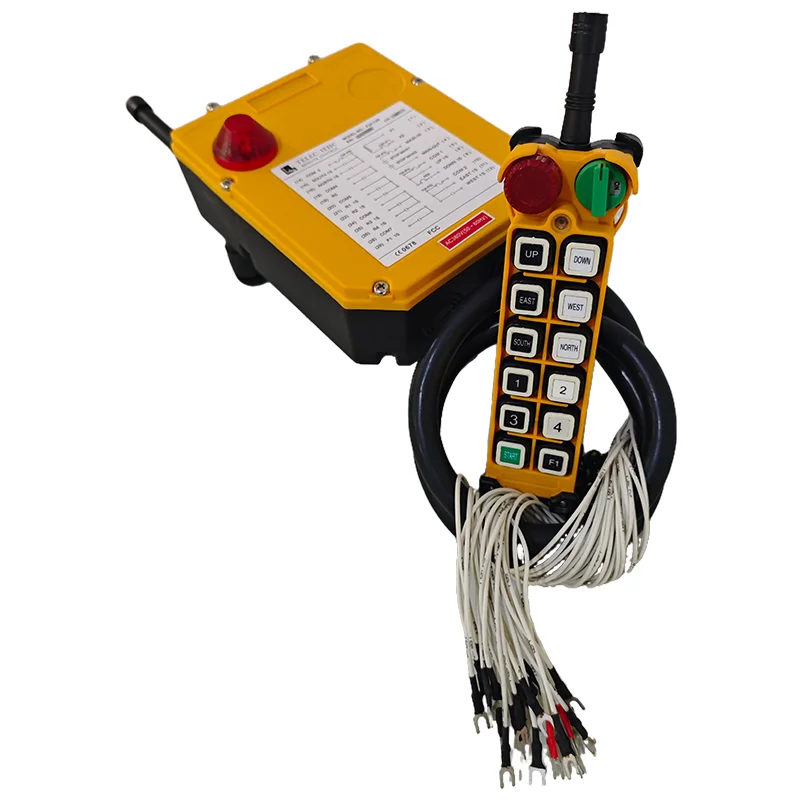
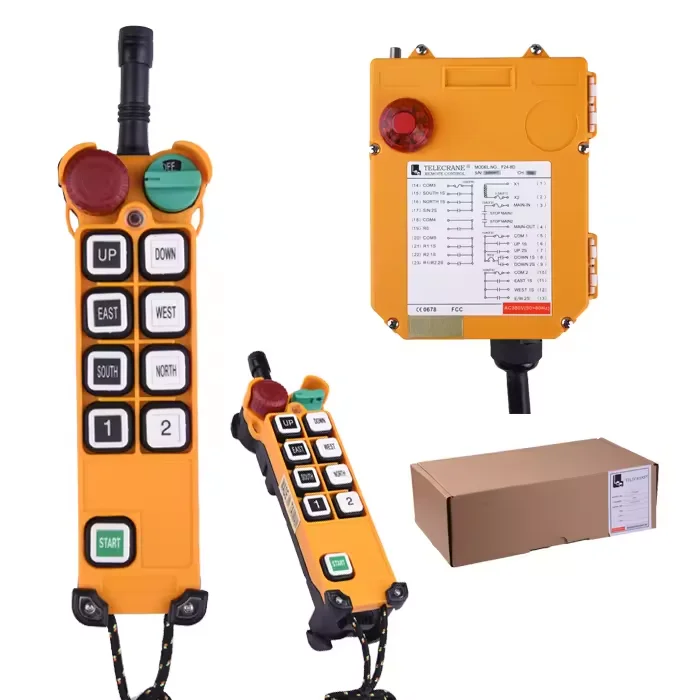
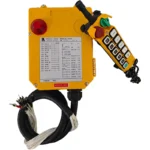
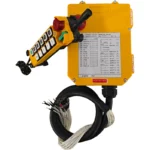
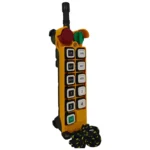
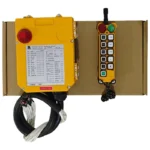
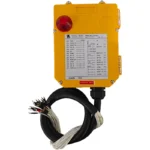
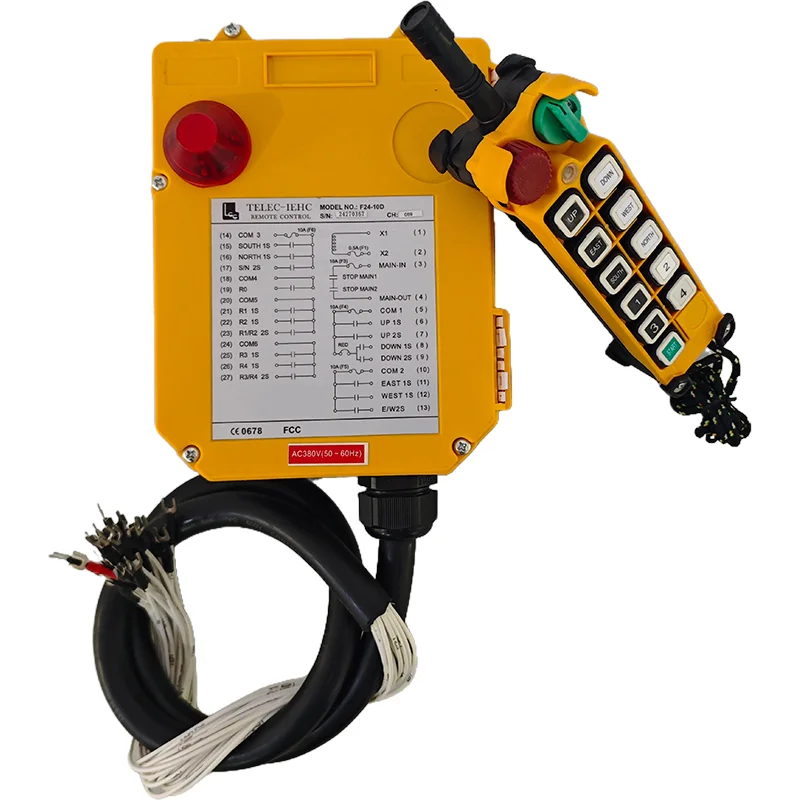
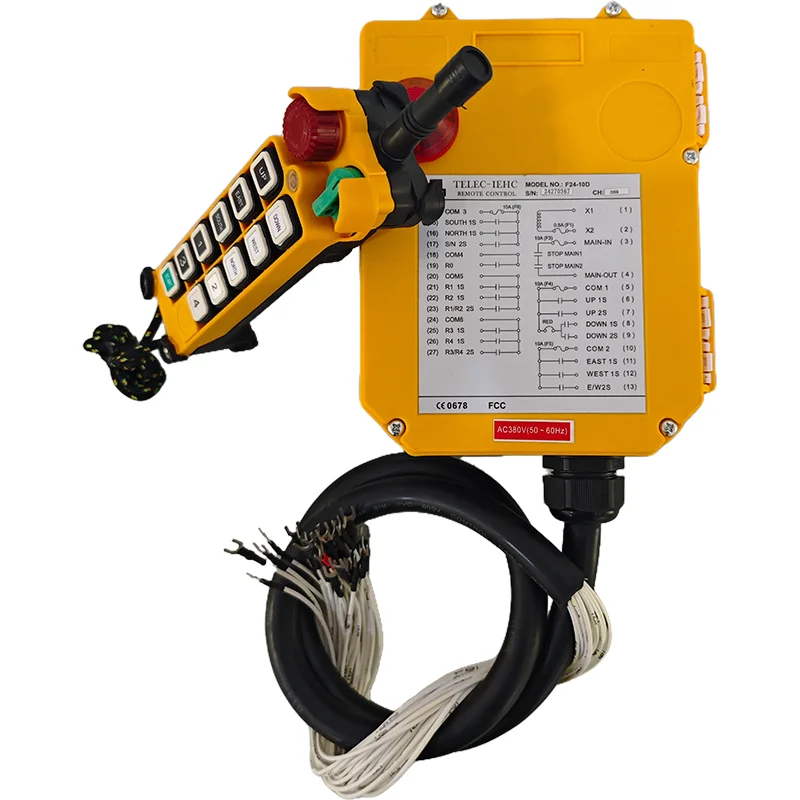
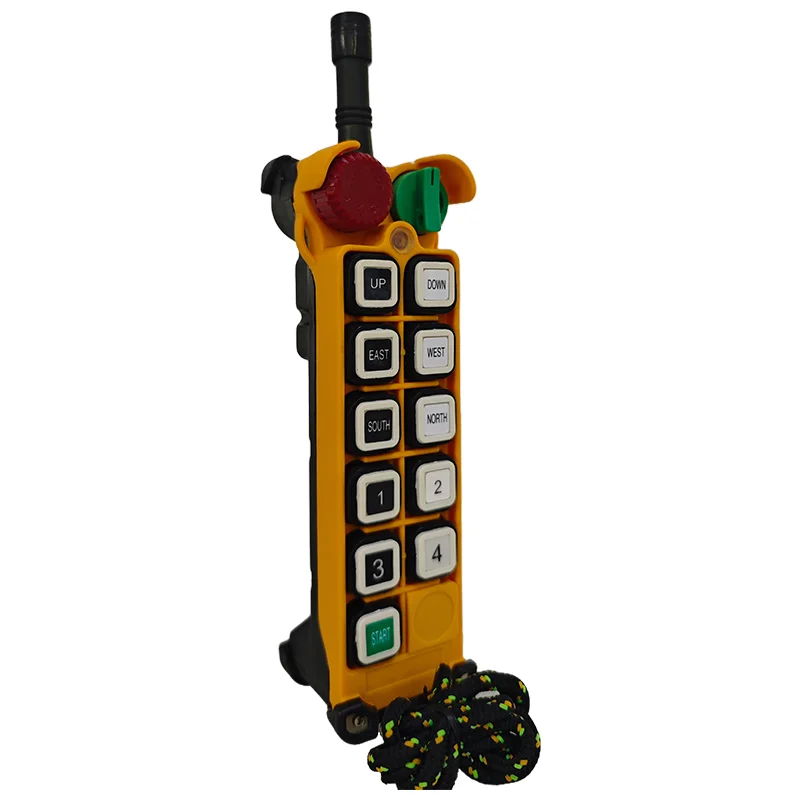
F24-10S 10D wireless remote control sits one step above the eight-button build in the F24 family. Same transmitter platform, same wide-voltage receiver, but ten buttons instead of eight — which is enough for a three-motion crane plus one auxiliary function, or for a single crane whose operators have been asking for a horn and a work-light switch on the transmitter.
Specifiers usually land on this size for one of two reasons: the machine already has an auxiliary circuit that keeps getting left out, or a fleet is being standardised and the buyer wants headroom rather than a second part number later.
■ What the ten-button layout is used for
Ten buttons let a single transmitter cover a machine with three direction motions and still leave room for non-motion circuits:
- Overhead and gantry cranes — six direction buttons plus start, stop, horn and one auxiliary contactor.
- Cranes with a powered auxiliary — a grab, a magnet, a rotating hook block or an outrigger, switched directly from the transmitter.
- Two-hoist installations — where a main and an auxiliary hoist share one crane and one control position.
- Machine tools and process lines — jog, clamp, unclamp and coolant functions added to the basic axis movements.
If you are weighing this against the smaller build, the specification differences are on the F24-8S/8D page; the two share a transmitter platform, so the visual and ergonomic difference between them is one button column.
■ Technical specification
| Ordering reference | F24-10S (single speed) / F24-10D (dual speed) |
| Buttons | 10, with fast and slow stages on each button in the D version |
| Layout for a standard crane | 6 direction, 1 start, 1 stop, 2 assignable auxiliary functions |
| Emergency stop | Mushroom-head, on the transmitter face |
| Magnetic safety key | Fitted; the transmitter is inoperative with the key removed |
| Enclosure | Glass-fibre reinforced nylon, IP66 |
| Working radius | 100 m class |
| Receiver supply | AC 36–380 V or DC 12–24 V, wide-voltage input |
| Identification | 32-bit code, more than 4.3 billion combinations, Hamming code protected |
| Pairing | Learning code held in the receiver; no DIP switches |
| Temperature range | −35 °C to +80 °C |
| Branding | Logo and custom button legends available on OEM orders |
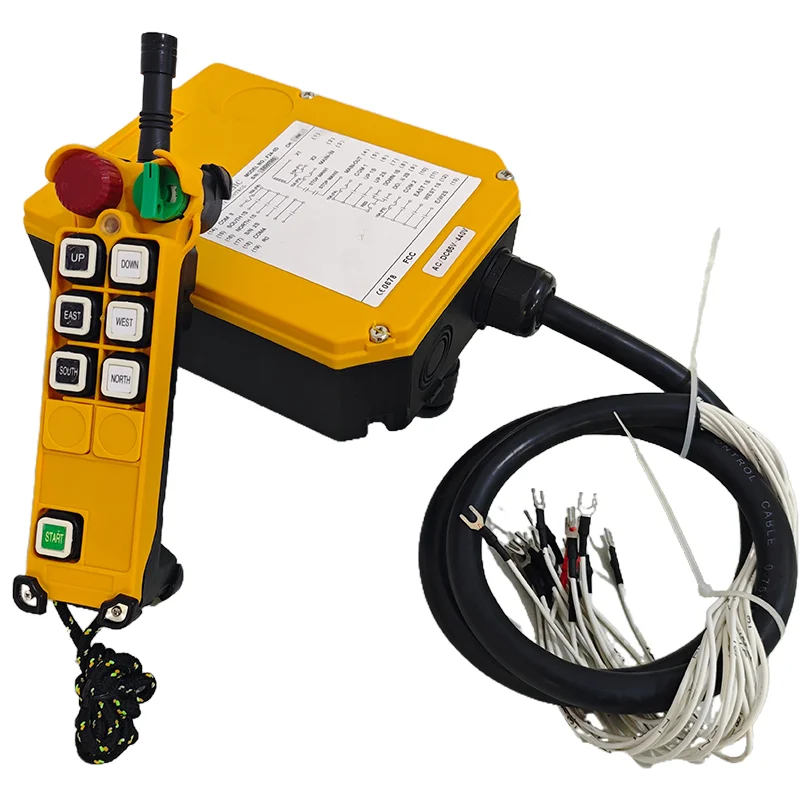
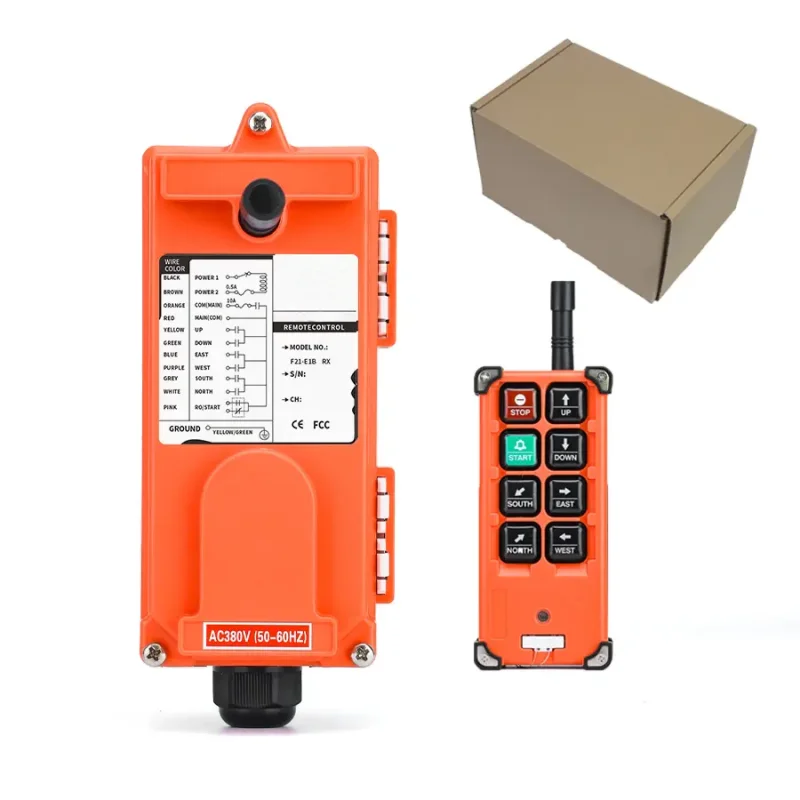
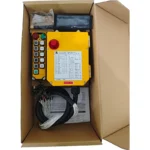
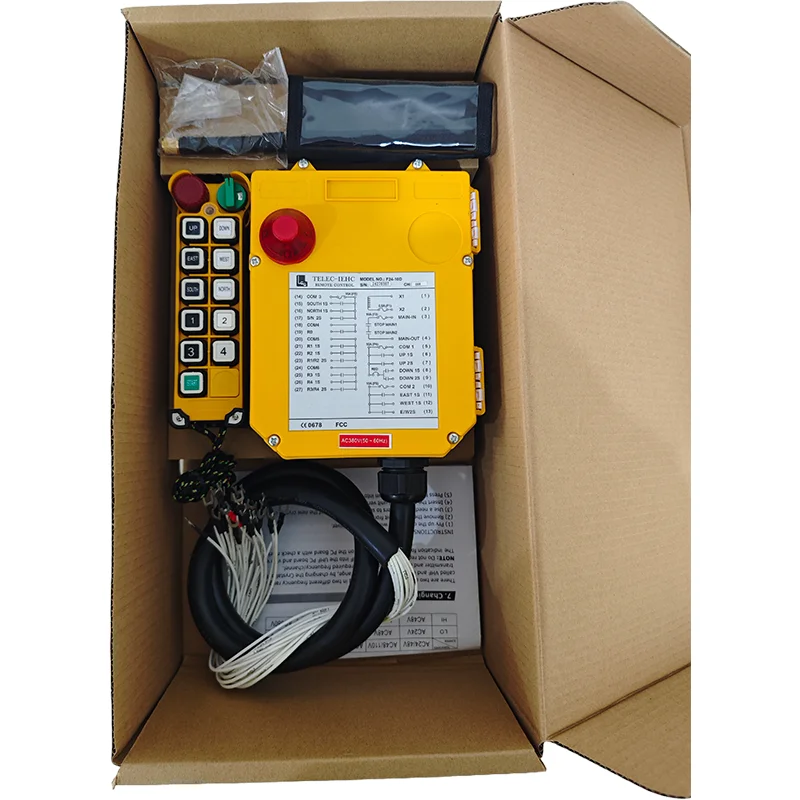
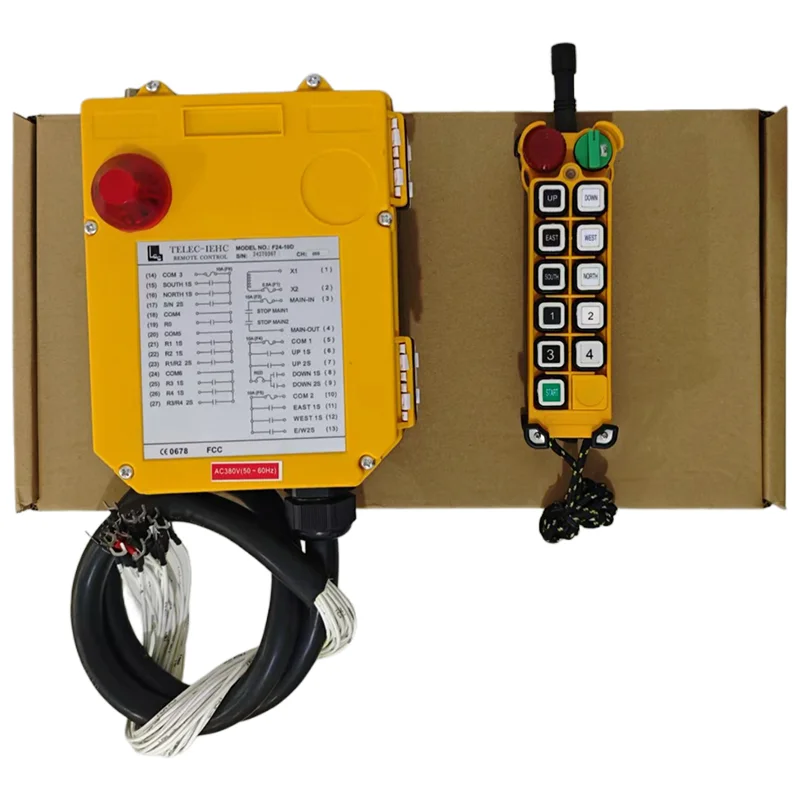
Shipped as a set with transmitter, receiver, connecting cable, batteries, pouch, manual and wiring diagram. Replacement button membranes, spare transmitters and receivers can be added to the same order.
■ Choosing the ten-button build over a smaller one
Four questions separate a machine that genuinely needs ten buttons from one that only thinks it does.
- List every function the operator will ask for in year two, not year one. Horns, work lights, fans, rotating-hook control and outrigger switches are the usual additions. If the list reaches eight once they are included, this is the right size; if it stays at six, the eight-button model is cheaper and identical to operate.
- Decide whether the auxiliary functions need one speed or two. A horn or a light needs one contact. An auxiliary hoist or a grab usually needs the fast and slow stages. That decision is what separates the F24-10S from the F24-10D build.
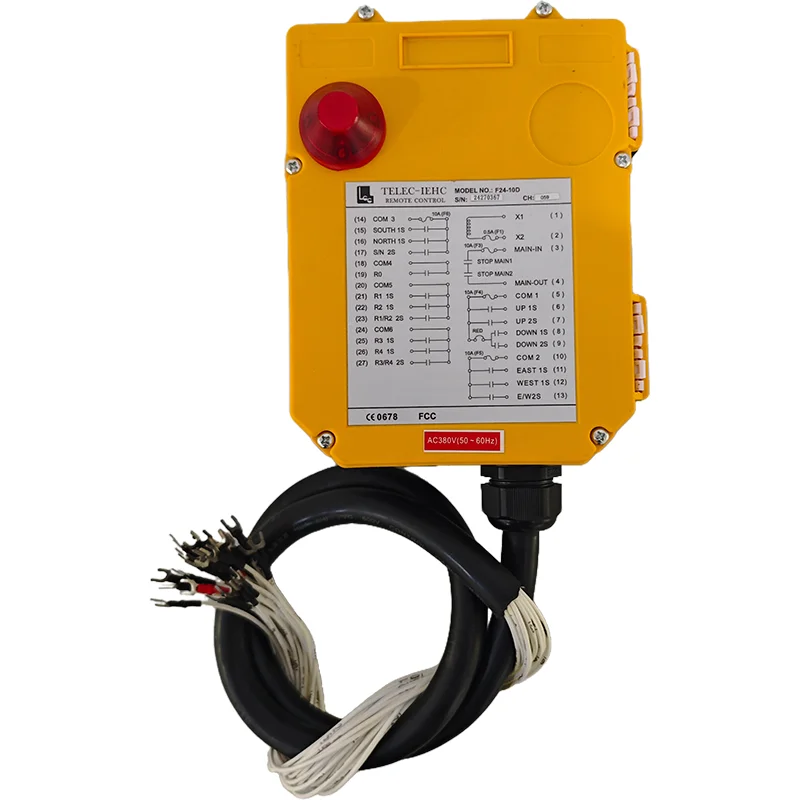
- Check the receiver outputs against the panel. Each button corresponds to a receiver output. Adding buttons means adding outputs, so confirm there is space in the control cabinet and that the machine’s control supply can carry the additional contactor coils.
- Think about whether one model can serve the whole fleet. Where several cranes of different configurations are in service, a ten-button transmitter programmed per machine means one spare part number covers the site instead of three. That is usually the strongest argument for buying the larger build.
■ Price bands for the F24-10S 10D wireless remote control
Indicative export prices for a complete set, ex-works Zhejiang. Confirm against a quotation before budgeting a purchase order.
| Order quantity | Indicative unit price (USD) |
| 1 set | 70 – 145 |
| 5–19 sets | 64 – 132 |
| 20 sets and above | 58 – 120 |
| Spare transmitter (S or D) | 36 – 72 |
| OEM logo programme, set-up | quoted per project |
OEM branding — your logo moulded or printed on the housing, together with custom button legends — is the largest single variable at this size and is quoted from 10 sets so that the set-up cost is absorbed over a run rather than loaded onto a handful of units. Beyond branding, price follows the S/D build, the relay output count and the quantity.
■ Ordering, delivery and the warranty behind the unit
What to put in the enquiry
Send the machine type, the full function list including auxiliary circuits, the panel voltage, the quantity, and whether each auxiliary function needs one speed or two. If OEM branding is involved, attach the artwork and say whether the logo is wanted on the housing, the label or both — the tooling differs, and it is cheaper to settle it at quotation than after the order is released.
Ordering and delivery
Single sets are supplied for evaluation, and 5 sets is the usual point at which volume pricing starts. Standard stock configurations typically ship in 5–10 working days; configured dual-speed receivers and OEM-branded transmitters take 20–30 working days because both the branding and the logic have to be produced. Payment is arranged with the quotation. Units ship in export cartons by courier for small orders and by air or sea for volume, with spare parts able to travel in the same consignment.
Warranty and support
Units carry a standard twelve-month warranty against manufacturing defects, with wear items such as button membranes and key switches excluded. CE marking and ISO-system production apply across the range, and the factory inspects units before dispatch rather than relying on batch sampling. On-site faults are handled by quoting the model and serial number so the recorded ID code can be matched and a pre-paired replacement supplied. Wiring and commissioning questions are answered directly by the technical team.
■ Why OEM buyers choose IEHC for this size
iehc has manufactured control equipment in Yueqing, Zhejiang since 2003 and works as an integrated manufacturer — 1,500 sqm of production space, 50+ staff and 20+ sets of production and testing equipment. At the ten-button size the buying decision usually turns on the OEM side of the business:
- Branding is a production process, not a sticker. Housings can be produced in your colours with your logo, and button legends are printed to your function names rather than left as generic arrows.
- Programmable logic per machine. Receivers can be configured to your sequence, so a distributor can hold one transmitter stock and several receiver programmes instead of several stock codes.
- Six patents and thirteen qualification certificates underpin the control products, with CE marking and an ISO quality system applying to the range.
- Documentation in the box. Manual, wiring diagram and legend drawing ship with each set, which is what distributors need when their customer asks a wiring question a month later.
Browse the full industrial remote control range or step up to the F24-12S/12D twelve-button model where two auxiliary functions are not enough.
Send your function list, panel voltage, quantity and any branding artwork through the contact page for a configured quotation. Standard commercial questions are answered on the IEHC FAQ page, and the wider range is listed under industrial remote control systems.
FAQ
What can the two extra buttons actually run?
Anything the receiver has an output for. In practice the two spare buttons carry a horn and a work light, a grab or magnet control, a rotating hook block, or an outrigger function. On the F24-10D each spare button also has a fast and a slow stage, so the same two buttons can drive an auxiliary hoist with creep speed. The only constraint is that the receiver must be built with enough relay outputs for whatever is assigned, which is why the function list should be settled at enquiry stage.
Can one transmitter control two hoists?
Yes, where both hoists share the same crane and the same control position. A typical layout uses four buttons for the main hoist and travel motions, four for the second hoist, and the remaining two for start and stop or an auxiliary. Both hoists must be interlocked so they cannot be operated in a way that overloads the structure, and that interlock is part of the receiver logic rather than something added afterwards.
Do the F24-8, F24-10 and F24-12 models share spares?
The transmitter platform and many service parts are shared across the range, which is useful for a fleet that mixes sizes. Receivers are not interchangeable between sizes, because the output count and the logic differ, and a transmitter paired to an eight-button receiver cannot drive a twelve-button one without being re-learned and re-mapped. Where fleet standardisation matters, ordering one size and programming it per machine avoids that problem entirely.
What is the minimum order for OEM branding?
Branded housings and custom legends are quoted from 10 sets, because the set-up work — artwork, print preparation and a first-article check — has to be carried by the quantity ordered. Below that, the more economical route is a neutral unit with a printed function-legend label, which can be supplied at any quantity. Send artwork with the enquiry and we will quote both routes so you can compare.
Can a whole crane fleet be standardised on this model?
It is the size most often chosen for that purpose. One ten-button transmitter can be programmed to suit several crane configurations, so a maintenance store holds a single transmitter part number and a small number of receiver programmes, and operators move between cranes without relearning a different button layout. Confirm the configurations in advance and we will produce the receiver maps and the legend drawings for each machine type as one project.
Request Quote
Tell us your specifications, quantity, or application scenario and we will reply with a tailored quote.