Pendant Control Station Wiring: Cores, Common, Earth
Cores follow functions, not buttons. The sum that sizes the cable, why the stop must not share the button common, and five pre-power checks.
Read More

A crane remote control should be accepted twice: once at the supplier’s bench before it ships, and once on your own crane before you sign anything. The factory test proves the unit leaves in working order. The site test proves it works in your panel, on your voltage, with your contactors and your steelwork between the operator and the receiver.
Most buyers only do the second one, and they do it by pressing a few buttons. That is not an acceptance test — it is a first impression. This article sets out what to check, in what order, and what should be treated as a failure rather than a note for later. It also explains why crane remote control acceptance testing is split into two events instead of one.
Factory acceptance testing — FAT — answers a narrow question: does this unit match the order and does it function? It is done on a bench with a clean supply, no steel between transmitter and receiver, and a technician who knows the pairing procedure. It cannot tell you whether your panel will accept the receiver’s outputs or whether the range is adequate in a bay full of columns.
Site acceptance testing — SAT — answers the question that matters commercially: can this machine be released to production? It happens after installation, with the crane installed, the operator standing where they will actually work, and a load on the hook. Doing only the SAT means a defect discovered on site has to be resolved across a shipping lead time.
Ask for these to be recorded, not just performed. A supplier who runs them routinely will have a sheet to fill in; one who does not will describe the test verbally.
| Check | Factory (FAT) | Site (SAT) |
|---|---|---|
| Identity and pairing | Required | Confirm unchanged after transport |
| Button-to-output matrix | Required, on the bench | Repeat through the installed panel |
| Stop function and latching | Required | Required, with a load on the hook |
| Link loss | Required | Required, with the machine moving |
| Control distance | Bench measurement | Measured at the operator’s real working positions |
| Housing and sealing | Visual and dimensional | Confirm after cable entries are made off |
| Documents | Supplied with the unit | Filed against the crane asset |
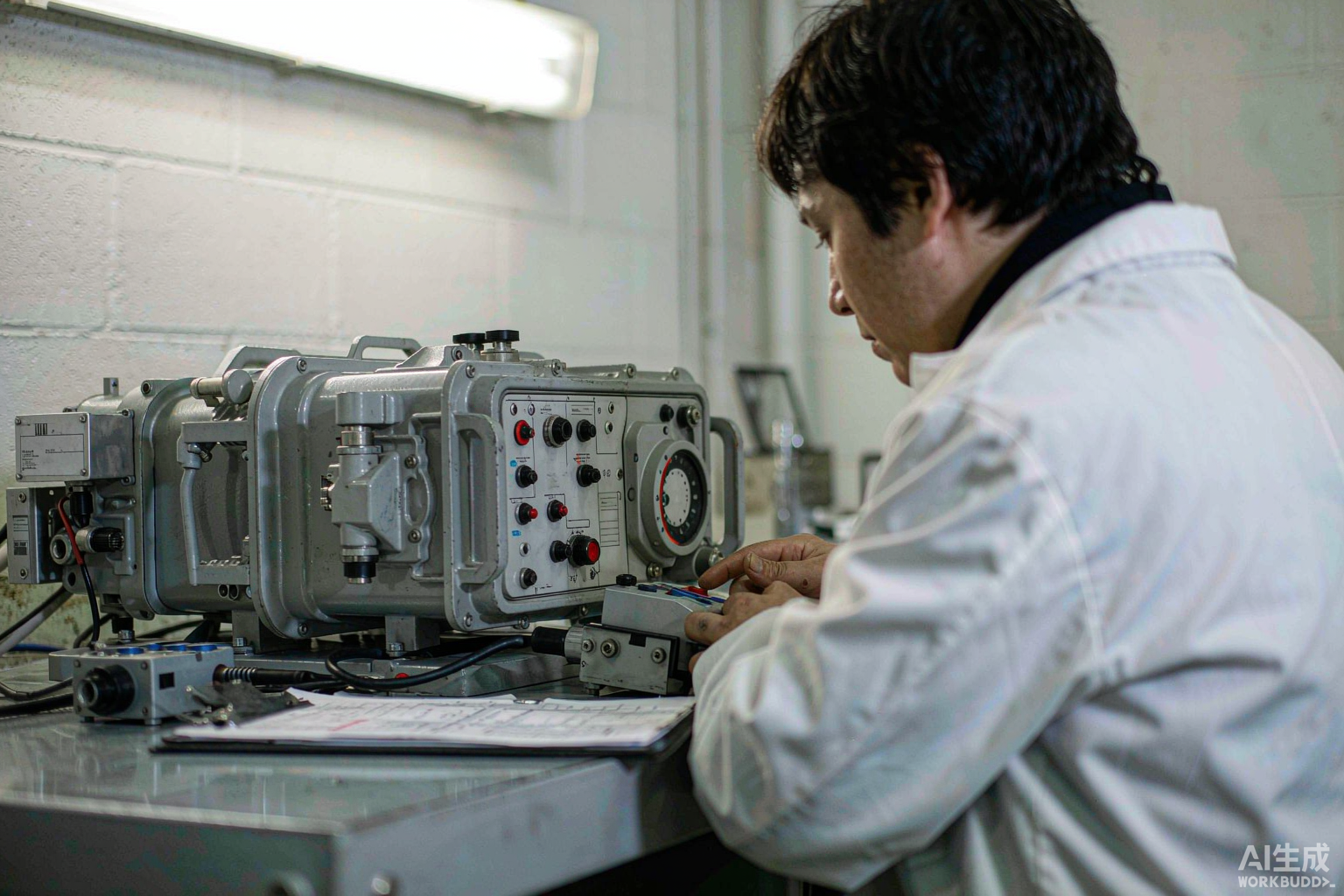
The site test repeats the functional checks through your own panel, which is where wiring errors appear. Three items deserve particular attention.
Voltage. Confirm the receiver is supplied from the same circuit its outputs command. A wide-voltage receiver such as that on the F24-12S/12D, which accepts AC/DC 18–65 V and 65–440 V from the same unit, removes most of this risk — but only if the correct range is connected. Mixed control voltages in one panel are more common than the drawings suggest.
Range at working positions. Walk the operator’s actual route with the crane in its least favourable position and confirm commands are accepted everywhere the operator is expected to stand. Record where the limit is. A unit that works at the panel and drops out behind a column has not passed, even if the rated figure says 100 m.
Stop with a load. The stop test that matters is the one performed with weight on the hook and the motion running. A stop that holds an empty hook proves the circuit is connected, not that it stops a load.
Deciding this before the test is what makes the test enforceable. The following should be treated as rejections, not as items to fix later in service.
Everything else — a stiff button, a scuffed housing, a battery that arrives part-charged — is a commercial discussion. The list above is not, because each item maps to a way the machine can injure somebody.
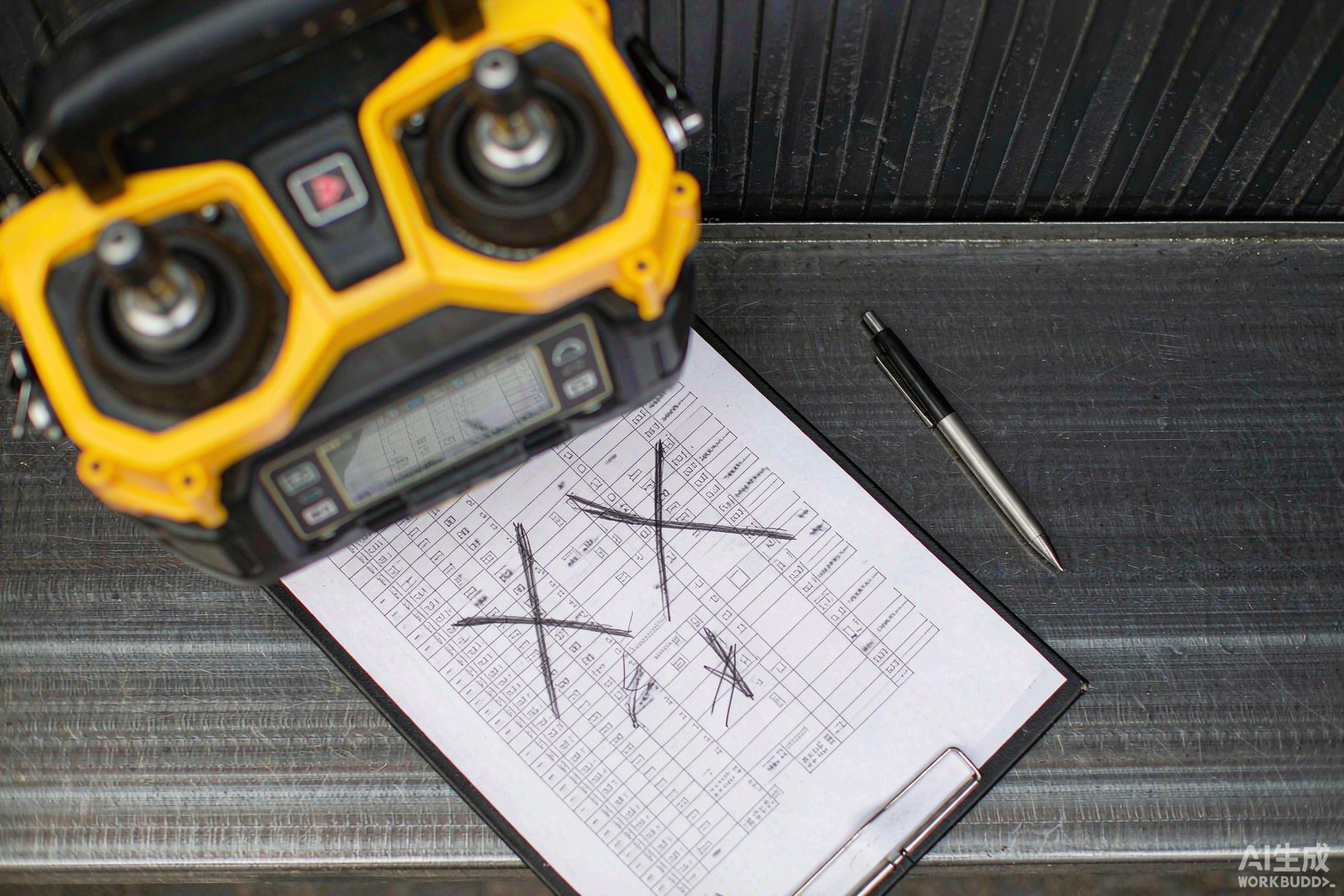
A one-page sheet per crane, with the button matrix along the top and the test items down the side, signed and dated, is worth more than a longer document nobody fills in. Keep it with the crane’s maintenance file and update it whenever the receiver is replaced, re-paired or moved.
Two fields are usually missing from bought-in templates and should be added. The first is the pairing record — transmitter identity, receiver identity, and the date the pair was established. Without it, the next technician re-pairs by experiment. The second is the antenna position, described in words, because a receiver that is later moved into a steel enclosure will lose range and no one will connect the two events.
Test at the bench for correctness, test on the crane for suitability, and write down both. The eight factory checks take under an hour on a bench and remove almost every defect that would otherwise surface in the first week of service. The site retest is shorter but cannot be skipped, because voltage, range and stop behaviour are properties of the installation as much as of the unit.
A smaller machine still deserves the same rigour — an eight-button F21-E1B on a monorail hoist can drop a load just as easily as a twelve-button unit on a double-girder crane, and the stop and link-loss checks are identical for both.
If you want the checklist adapted to a specific configuration, send the model, the motion list and the control voltage through the contact form, and the FAQ page covers the questions that come up most often before an order is placed.
Yes. A factory acceptance test catches configuration errors, legend mismatches and stop-circuit defects while the unit is still with the supplier, where correcting them costs days rather than a shipping cycle. Ask for the results in writing rather than a verbal confirmation.
The link-loss test. It is the cheapest check to perform, it requires no instruments, and it verifies the one failure mode that no visual inspection will reveal — a receiver that keeps the crane running after the transmitter has stopped sending.
The eight factory checks take under an hour once the unit is on a bench. The site retest is usually thirty to sixty minutes on a single crane, plus the time to walk the operator’s working route for the range check.
You need an extra step, not a separate procedure. Confirm that slow and fast channels reach the correct contactor pair for every direction, because swapped stages produce a machine that appears to work while behaving backwards under load.
At minimum a wiring diagram, a pairing record identifying the transmitter and receiver, and the certification promised at quotation — for CE-marked units, the declaration and the product quality inspection report. Missing documents should be treated as an incomplete delivery.