Description
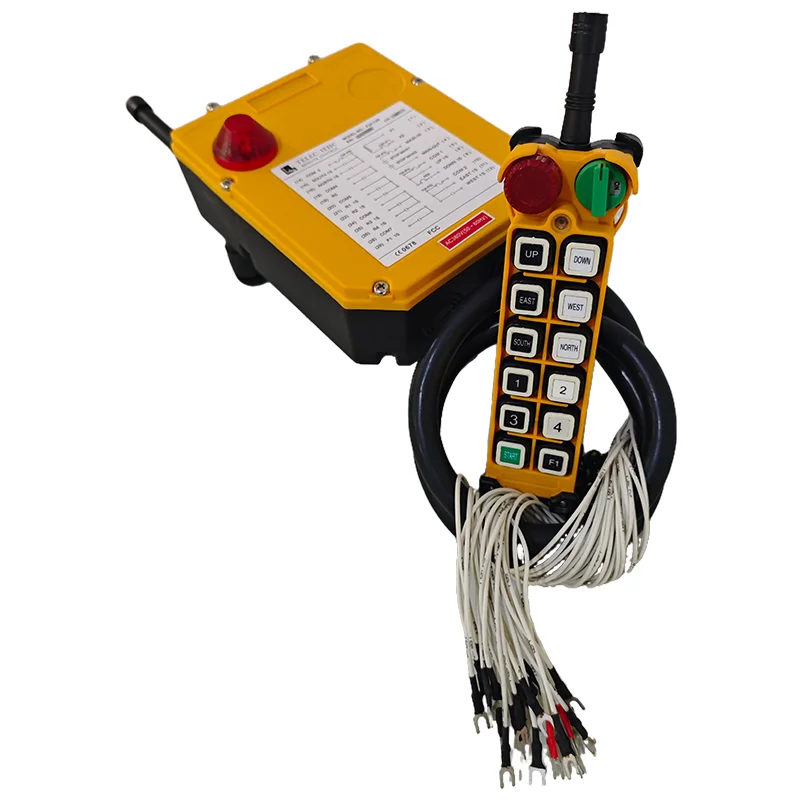
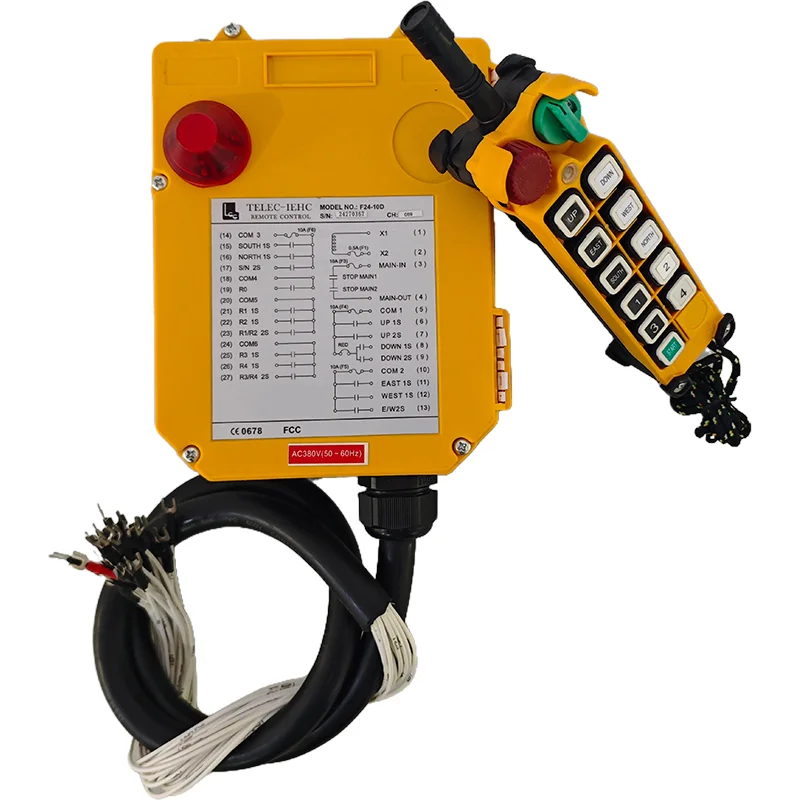
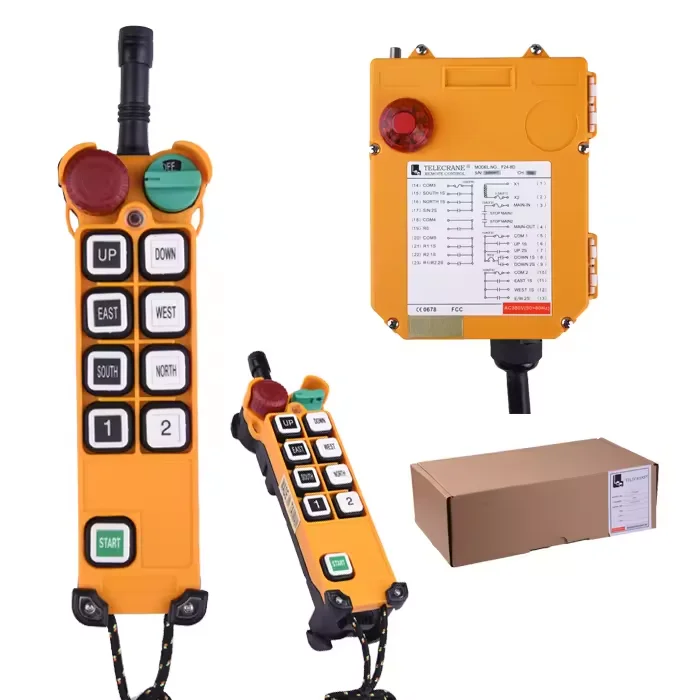
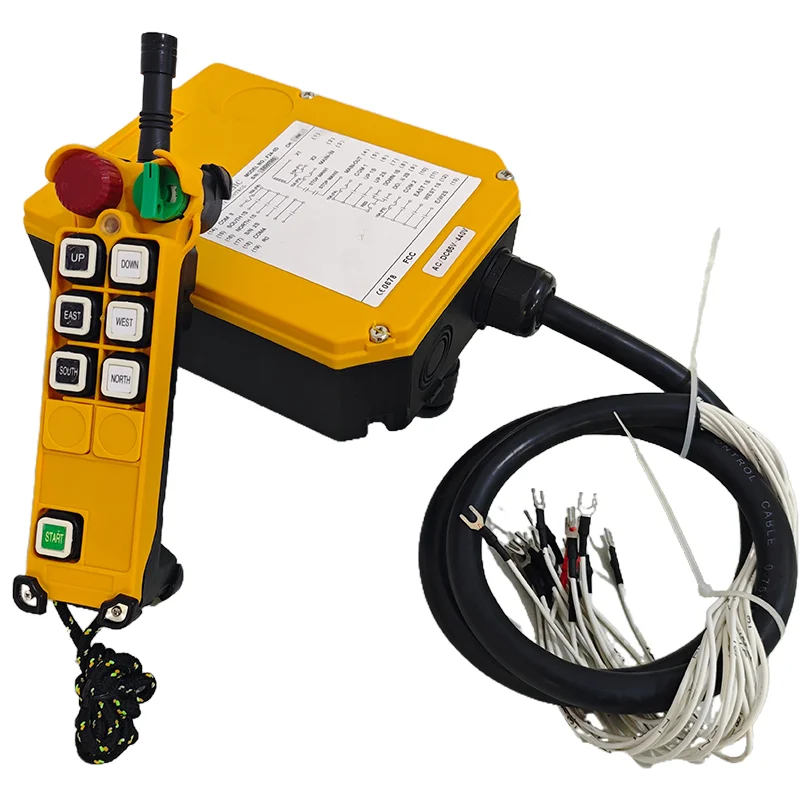
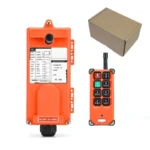
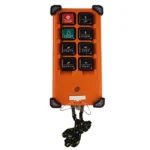
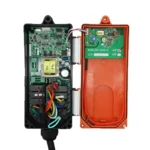
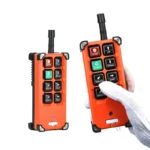
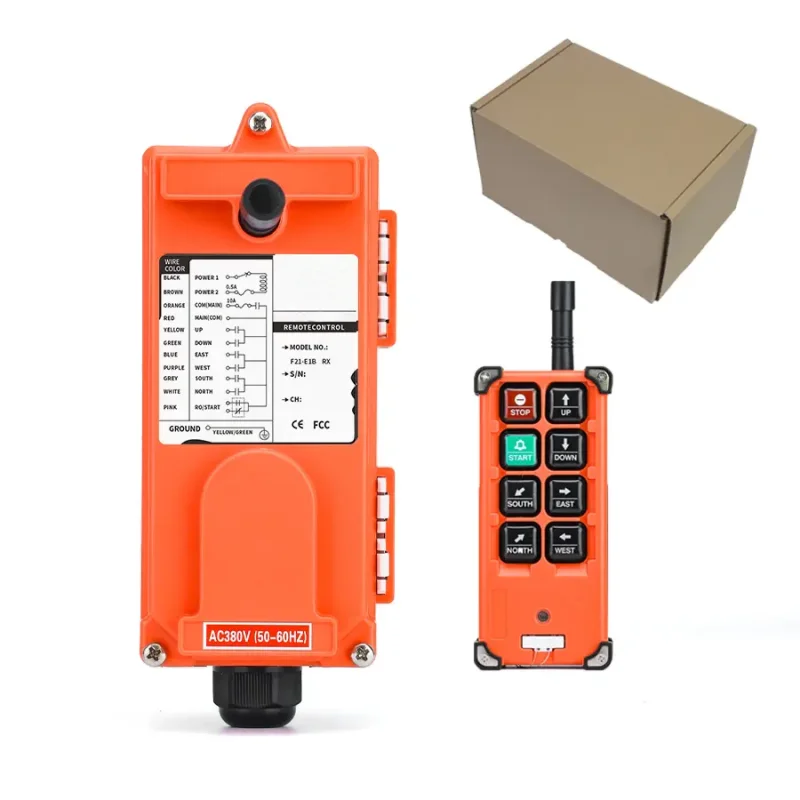
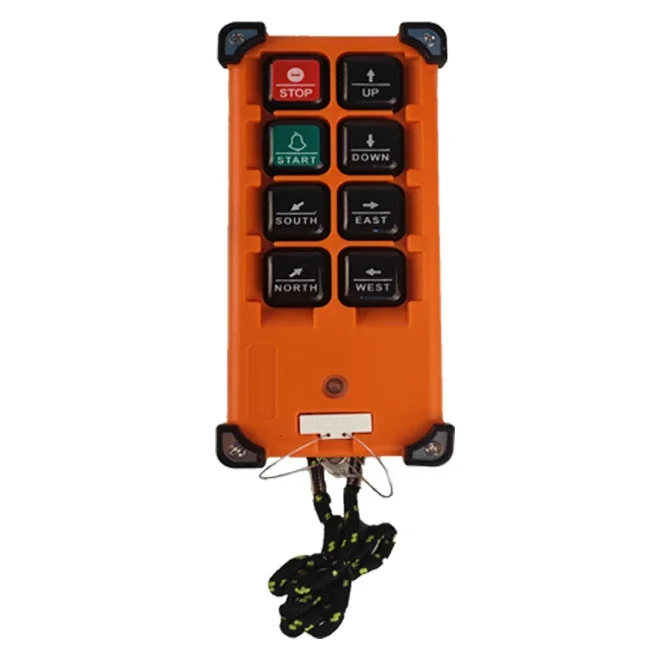
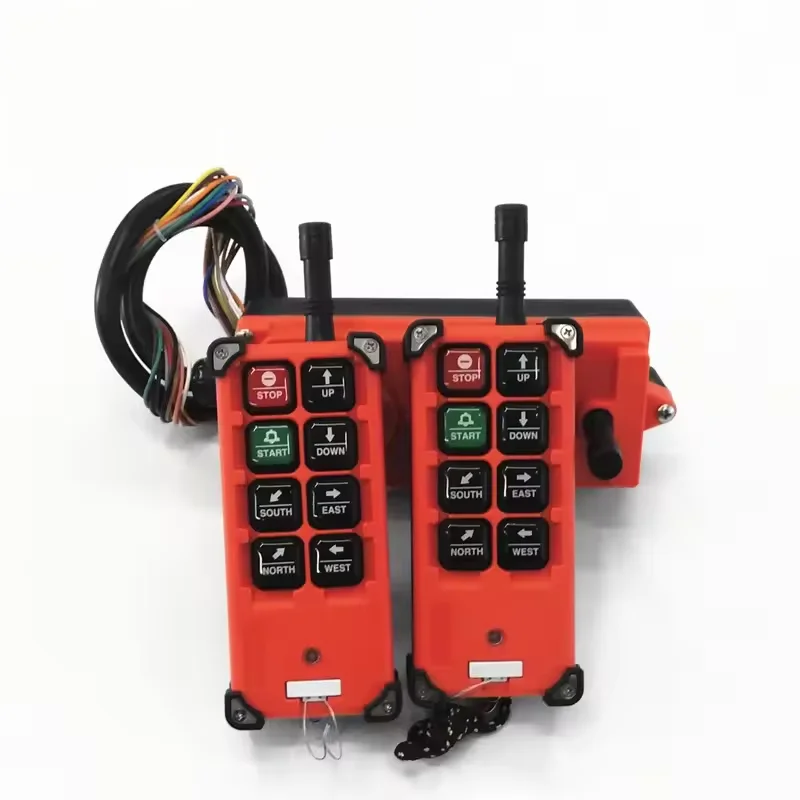
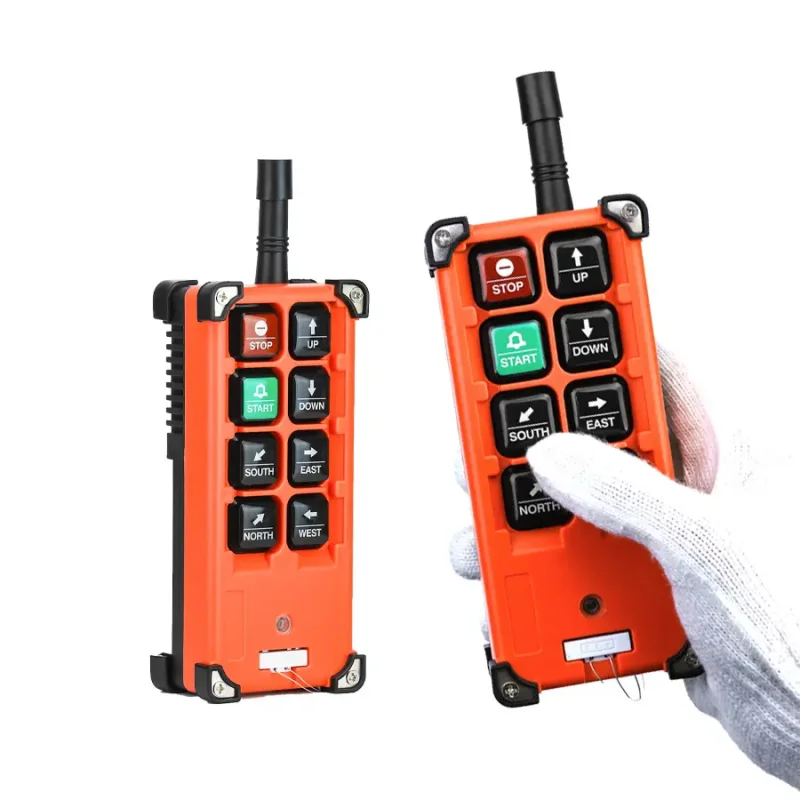
F21-E1B remote control is an 8-button single-speed radio system for electric chain hoists, single-girder overhead cranes and light gantry cranes. A hand-held transmitter replaces the pendant cable, and a panel-mounted receiver does the switching inside the control cabinet, so the operator can stand where the load and the surroundings are both in view.
The model has been in continuous production for more than two decades, which is the practical reason many retrofit buyers start here: transmitters, receivers, batteries and replacement housings stay available for years after the first unit is installed.
■ What the F21-E1B remote control operates
Three groups of equipment account for almost all F21-E1B demand:
- Lifting machinery — single-girder overhead cranes, gantry cranes, jib cranes, wall-mounted slewing jibs, and light monorail hoists.
- Lifting equipment — electric chain hoists and wire-rope hoists, winches, lifting platforms and stage machinery.
- Simple process drives — conveyor start/stop, small batching pumps and single-action machine movements where six directions are enough.
Radio control changes the way a machine is risk assessed. Before you order, confirm that wireless operation is acceptable under your own site assessment — some installations require local control or a continuous line of sight, and no transmitter can substitute for that decision.
■ Full specification table
| Model | F21-E1B |
| Transmitter buttons | 8 total — 1 start, 1 stop, 6 single-speed direction buttons |
| Transmitter housing | Glass-fibre reinforced nylon (glass-fibre PA) |
| Transmitter ingress protection | IP65 |
| Safety key | Magnetic, removable; transmitter is disabled while the key is out |
| Control radius | 100 m or more in open plant conditions |
| Frequency options | VHF 310–331 MHz or UHF 425–446 MHz |
| ID code | 32-bit, over 4.3 billion combinations, factory set |
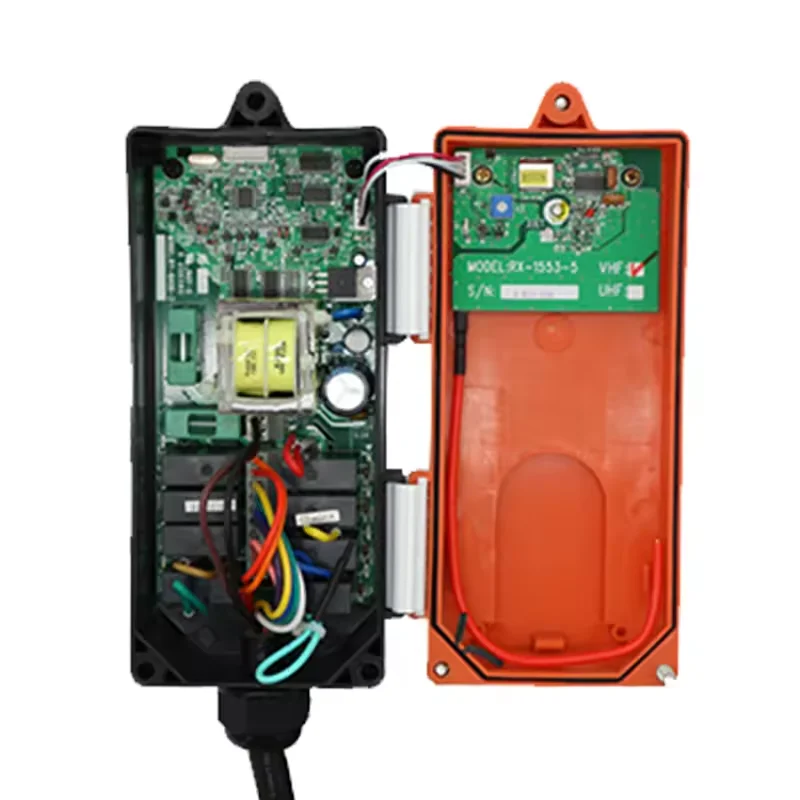
| Receiver input voltage | AC 380 V (50–60 Hz) standard; AC/DC 24 V and AC 220 V as options |
| Transmitter power | 2 × AA alkaline batteries, 3 V DC |
| Operating temperature | −35 °C to +85 °C |
| Receiver termination | Supplied with wiring diagram; reserved wire length for panel termination |
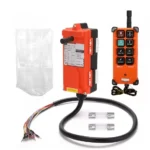
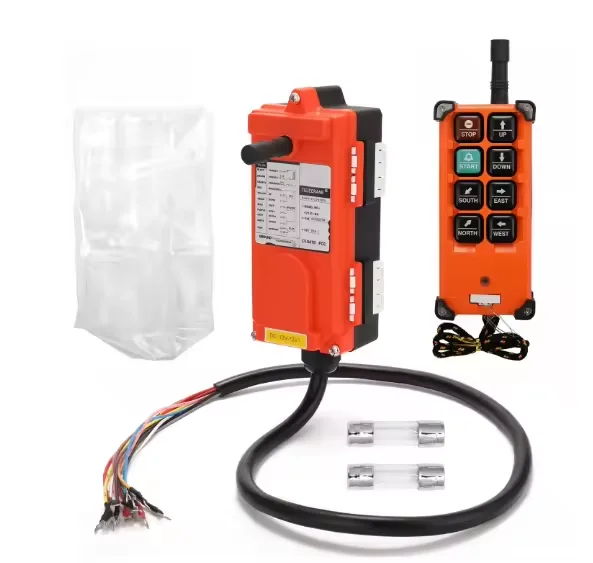
Packing contents: transmitter × 1, receiver × 1 with 1 m or 1.5 m connecting cable, transmitter bag × 1, spare fuse × 1, user manual and wiring diagram × 1.
■ How to check the F21-E1B remote control suits your machine
Five checks decide whether this model is the right one. Work through them in order — mismatching the third or fourth check is the usual reason a remote has to be exchanged.
- Count the direction motions. Each direction button closes one motion contactor. A standard single-girder crane with hoist up/down, trolley left/right and bridge forward/reverse needs exactly six direction buttons, which is what the F21-E1B supplies.
- Decide whether one speed is enough. The F21-E1B gives full-speed closure per direction. If the hoist runs a two-speed motor or a VFD and operators need creep or inching for setting a load, move to a dual-speed transmitter such as the F24-8D 8-button dual-speed remote.
- Match the receiver to your control-circuit voltage. AC 380 V is standard. If your panel runs 220 V, 24 V or a DC control circuit, order that option on the same order — later voltage changes mean a second receiver, not a setting adjustment.
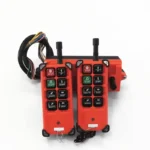
- Allow for a second transmitter. The receiver holds the ID code, so a spare transmitter can be paired before shipping. On a production hoist that is cheaper than a lost shift.
- Check the radio environment. Choose VHF or UHF according to what else is transmitting on site. Sites already dense with 433 MHz equipment are better served by the VHF band; tell us the other systems in use and we will check channel availability before the frequency is set.
■ F21-E1B remote control price range
The figures below are indicative export price bands for a complete transmitter-and-receiver set, quoted ex-works Zhejiang. They are a planning guide, not a quotation — the final number depends on the configuration and quantity confirmed on your order.
| Configuration | Indicative unit price (USD) |
| Transmitter only (spare or replacement) | 16 – 26 |
| Complete set, 1–4 sets | 28 – 48 |
| Complete set, 5–29 sets | 24 – 42 |
| Complete set, 30 sets and above | 17 – 36 |
| Receiver only, standard AC 380 V | 18 – 30 |
Four things move the number more than anything else: order quantity, whether the receiver voltage is the standard 380 V or a special option, whether the transmitter carries custom button legends or your own branding, and whether certification paperwork (CE declaration, test report, packing list for customs) is required. Spare transmitters bought at the same time as the set are priced lower than transmitters ordered separately later.
■ Ordering information and quality assurance
What to send with your enquiry
A single enquiry that includes all five of the following gets a confirmed configuration back the same working day: the machine type and its motion list, the control-circuit voltage available in the panel, the required button legends or direction symbols, the quantity and whether a spare transmitter is wanted, and any OEM requirement such as moulded branding or a custom label.
Commercial terms
Samples and evaluation units ship from 1 set. Standard production runs are quoted from 5 sets, and OEM branding is quoted from 10 sets. Typical lead time is 5–10 working days for standard sets held in stock and 15–25 working days where the receiver voltage or transmitter legends are customised. Payment is by T/T with a deposit for production orders, or in full for sample orders; documented terms are issued with the quotation. Sets ship in export cartons by international courier for small orders and by air or sea freight for volume.
Quality assurance
Every F21-E1B set is function tested and inspected before it leaves the factory, and each receiver is checked against the transmitter it will be paired with rather than sampled from a batch. Units carry CE marking, and the factory operates an ISO quality system. The wiring diagram and manual are supplied with each set so the receiver can be terminated and commissioned without guesswork. Should a unit arrive faulty, contact us with the model and the fault description and we will arrange replacement or repair under the standard warranty; the 32-bit ID code of every unit is recorded, so a replacement transmitter can be factory-paired to your existing receiver.
■ Why buyers source the F21-E1B remote control from IEHC
Zhejiang iehc Electrical Technology Co., Ltd has manufactured electrical control equipment in Liushi Town, Yueqing — China’s low-voltage electrical cluster — since 2003. Four things matter to buyers who repeat-order this model:
- Production continuity. The same transmitter and receiver architecture has been made for over twenty years, so a machine retrofitted this year can be re-ordered against the same ID-pairing method in five years’ time.
- In-house manufacture, not trading. A 1,500 sqm plant with 50+ staff and 20+ sets of production and testing equipment, working as an integrated manufacturer rather than an assembly-only operation.
- Practical documentation. Wiring diagrams, installation manuals and button-legend drawings are issued as standard documents, which is what an integrator needs when the crane is commissioned by someone other than the installer.
- Spares at the same time as the units. Transmitters, receivers, batteries, housings and fuses can be added to any order, so maintenance stock arrives with the equipment instead of a separate shipment months later.
For a wider view of the range, see all industrial remote control systems, or compare this model against the 12-button F24-12S/12D where more motions or dual speed are needed.
Send the machine type, motion list and panel voltage through our contact page and we will confirm the configuration, the frequency band and a firm price. General purchasing questions — packing, payment, documentation — are answered on the IEHC FAQ page.
FAQ
How is the F21-E1B remote control paired to its receiver?
The receiver stores the transmitter's 32-bit ID code, and pairing is done at the receiver using the manufacturer's learning procedure described in the supplied manual — there is no code wheel or DIP switch to set by hand. Because the code is stored rather than fixed by wiring, a replacement or second transmitter can be learned to the same receiver on site, and every unit's code is recorded at the factory so a paired replacement can be supplied if the original is lost.
What batteries does it use, and how long do they last?
Two AA alkaline cells, giving a 3 V transmitter supply. Consumption is low and a set normally lasts several months in daily service; alkaline cells should be removed if the transmitter will be stored for a long period. The battery compartment opens without tools, so a change takes under a minute — keep a spare set in the transmitter bag rather than relying on a low-battery indication at the end of a shift.
Can the F21-E1B run on a 220 V or 24 V control panel?
Yes, but the receiver must be ordered for that voltage. AC 380 V is the standard build; AC 220 V and AC/DC 24 V are factory options. The voltage is fixed at manufacture, so state your panel voltage on the enquiry — a 380 V receiver cannot be re-tapped to 24 V in the field.
Will it interfere with other radio equipment on site?
The transmitter and receiver are paired by a 32-bit ID code with over 4.3 billion combinations, so two F21-E1B systems on the same site do not cross-operate even on the same channel. Interference of a different kind — lost range or intermittent stops caused by other transmitters or by metal structures — is a site condition, not a code problem. Where the site is radio-dense, order the VHF version or ask us to check channel availability before fixing the frequency.
Is the F21-E1B suitable outdoors and in dusty plants?
The glass-fibre reinforced nylon housing is sealed to IP65, which covers dust ingress and water projected from a nozzle in any direction, and the operating range to −35 °C / +85 °C covers foundries, cold stores and outdoor gantries. IP65 does not cover immersion, and the transmitter should not be left hanging in standing water or washed with a high-pressure lance.
Request Quote
Tell us your specifications, quantity, or application scenario and we will reply with a tailored quote.