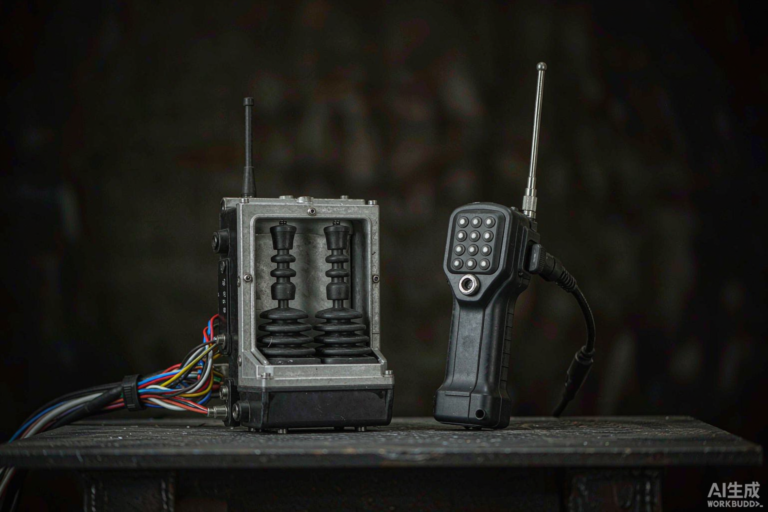
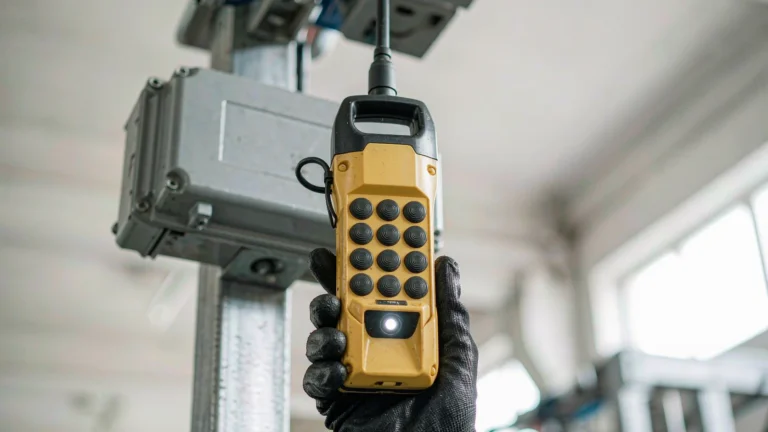
Buttons issue discrete commands, joysticks blend two axes. Which machines need proportional control, which are better on buttons, and what choosing wrong costs.
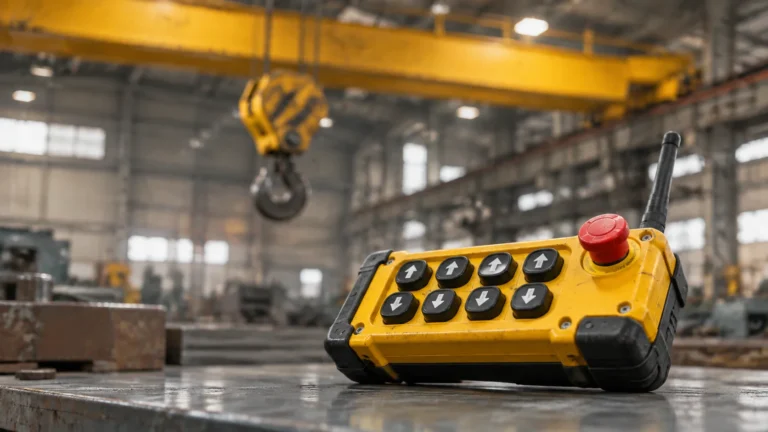
Two buttons per motion, two for start and stop, one per auxiliary. A worked method for sizing a crane remote control, with layouts from six to twelve buttons.
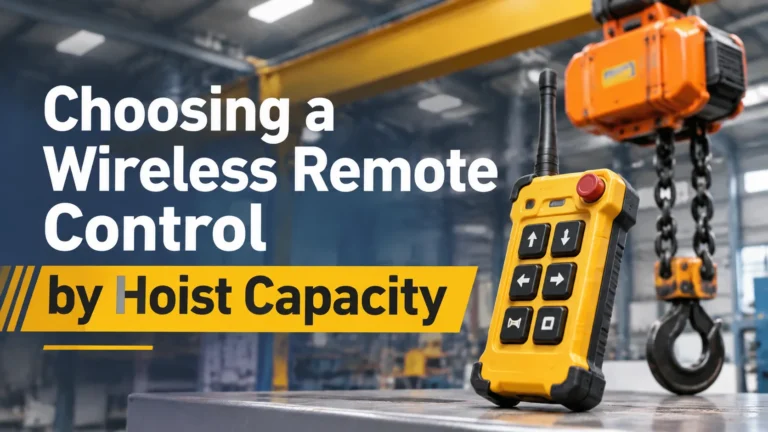
Capacity does not choose the remote control; the panel does. The three specs that actually move with tonnage, and how the layouts differ from 1 t to 10 t.
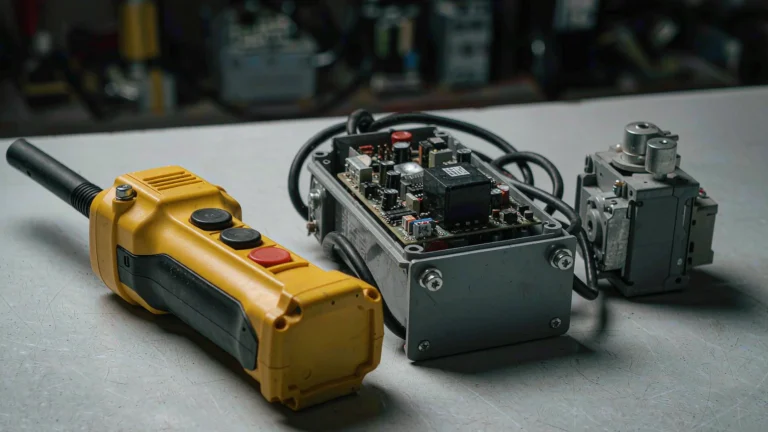
One contactor per direction means single-speed; two means dual-speed. How to read the panel, count the outputs and choose the right station before ordering.
Six conversions stand between a button press and a closed contactor. Where identity, latency and the extra channel for a second speed actually sit in the chain.
A crane that will not move is usually a receiver reporting something. Read the five LED states, count the blink groups, and know when the fault has left the radio.
An overhead crane remote control installation is a panel project: survey, receiver and antenna placement, stop circuit interface and the handover tests.