Pendant Control Station Wiring: Cores, Common, Earth
Cores follow functions, not buttons. The sum that sizes the cable, why the stop must not share the button common, and five pre-power checks.
Read More

Single-speed versus dual-speed is not a preference you express at the order stage — it is a property of the machine you are already standing in front of. If each direction of travel on your hoist has one contactor behind it, the control is single-speed and a single-speed industrial remote control will drive it. If each direction has two contactors, or a two-stage contactor pair, the machine is dual-speed and a single-speed transmitter will throw away the slow stage the moment it is fitted.
This article covers the single speed vs dual speed hoist control decision in the order you actually meet it: identify what the machine already has, count the outputs it demands, then choose the station.
Speed stages are created by the motor and the contactors, not by the transmitter. A two-speed hoist motor is wound for two speeds, or has a pole-changing arrangement, and the panel brings out a separate contactor for each stage. Pressing “up” on a dual-speed system energises the slow-up contactor first; pressing harder or pressing a second button brings in the fast-up contactor.
That single fact drives everything else in the specification. The transmitter still has one button per direction. What changes is what happens behind the receiver: two outputs instead of one for every direction, wired to two different contactor coils.
| Item | Single-speed | Dual-speed |
|---|---|---|
| Contactors per direction | One | Two (slow and fast) |
| Receiver outputs per direction | One | Two |
| Transmitter buttons per direction | One | One, with a second stage on the same button |
| Motor requirement | Any single-speed motor | A two-speed or pole-changing motor |
| Typical machines | Monorail hoists, light jib cranes, short-travel trolleys | Overhead cranes with long travel, heavy loads needing precise landing |
| Wiring and commissioning | Straightforward | More outputs, more terminals, more test steps |
Work through these checks in order. The first two are usually enough, and neither requires opening a panel.
A caution worth stating plainly: a two-speed motor fitted with a single-speed controller still works, but only at one speed. Nothing fails, nothing alarms, and the operator simply loses the slow stage. That is how single-speed remotes end up on machines that were built dual-speed, and it is usually discovered by the person who has to land a load within a centimetre.
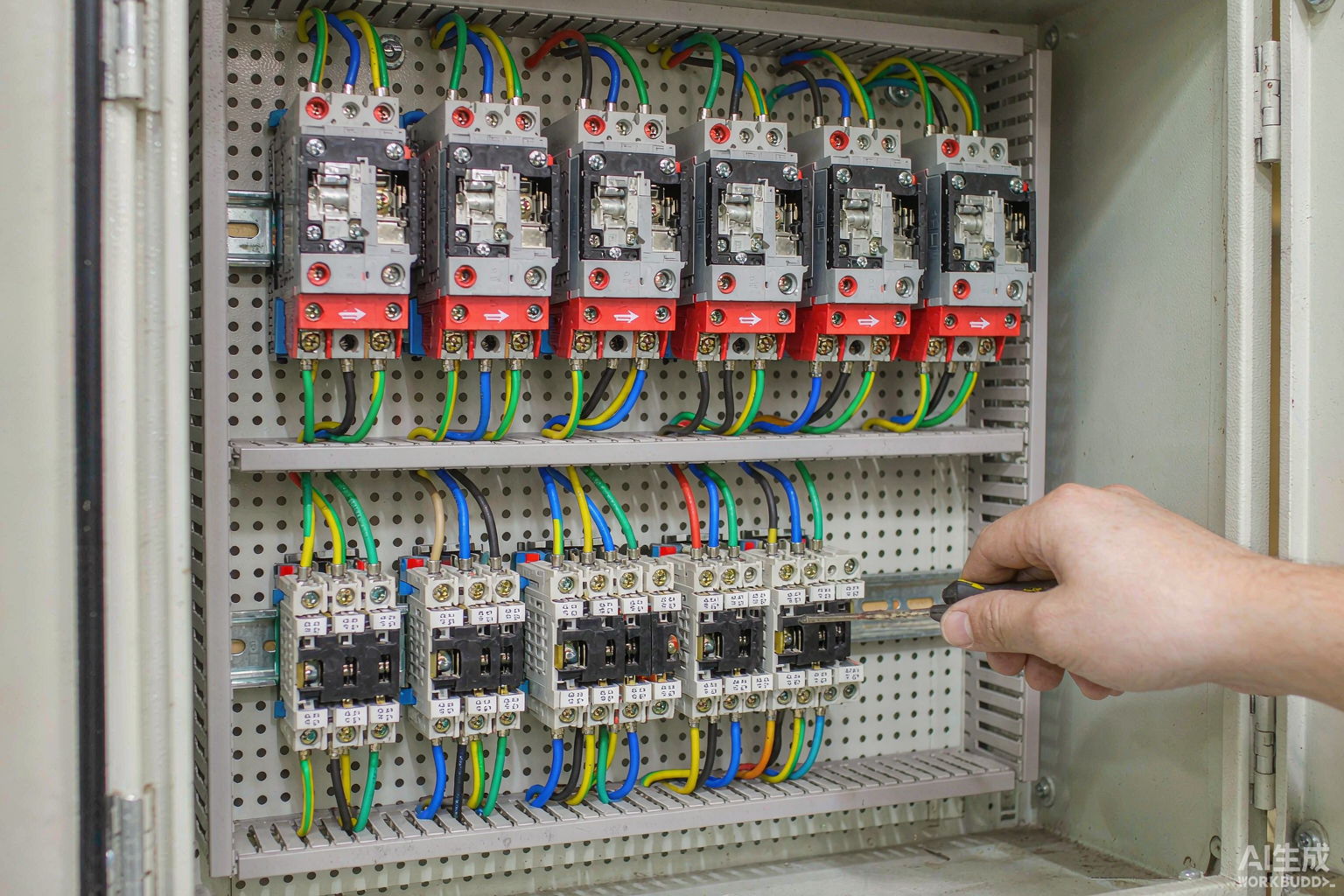
The practical consequence is output count. Count the direction functions first, then multiply by the number of stages.
| Machine | Direction functions | Outputs, single-speed | Outputs, dual-speed |
|---|---|---|---|
| Hoist on a monorail runway | 2 | 2 | 4 |
| Single-girder crane, three motions | 6 | 6 | 12 |
| Crane with auxiliary hoist | 8 | 8 | 16 |
| Crane with auxiliary hoist and grab | 10 | 10 | 20 |
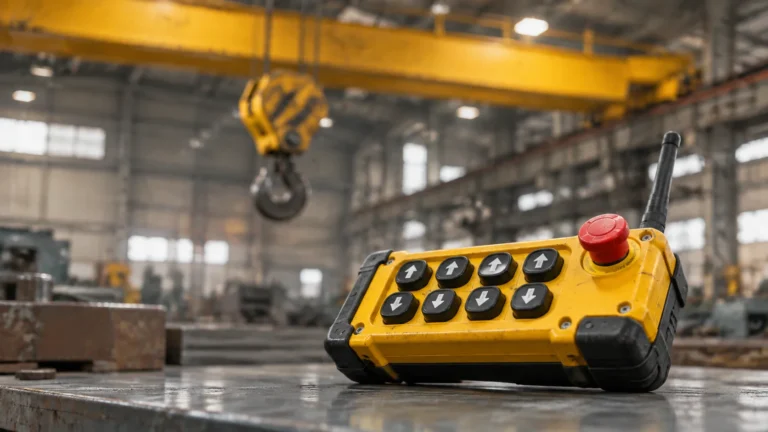
This is where buyers most often misread the catalogue. The F24-8S and F24-8D are physically the same eight-button transmitter — six direction buttons plus start and stop. The S version closes one contact per button; the D version gives every button a fast and a slow stage. Choosing between them is a receiver decision, and it cannot be changed after the unit is built. The same logic applies one size up: the F24-12S/12D is a twelve-button unit whose single or dual-speed logic is set at order, and its receiver covers AC/DC 18–65 V on the low range and 65–440 V on the high range, which matters when a workshop maintains both 24 V control circuits and 380 V cranes.
Where the button count genuinely does change is the station size. A three-motion single-speed crane fits comfortably into the eight-button class. The same crane in dual-speed form still fits eight buttons, but if it also carries a horn, a work light or a second hoist, you are pushed into the ten- or twelve-button builds — the ten-button F24-10S/10D adds two assignable buttons to the same platform for exactly that reason.
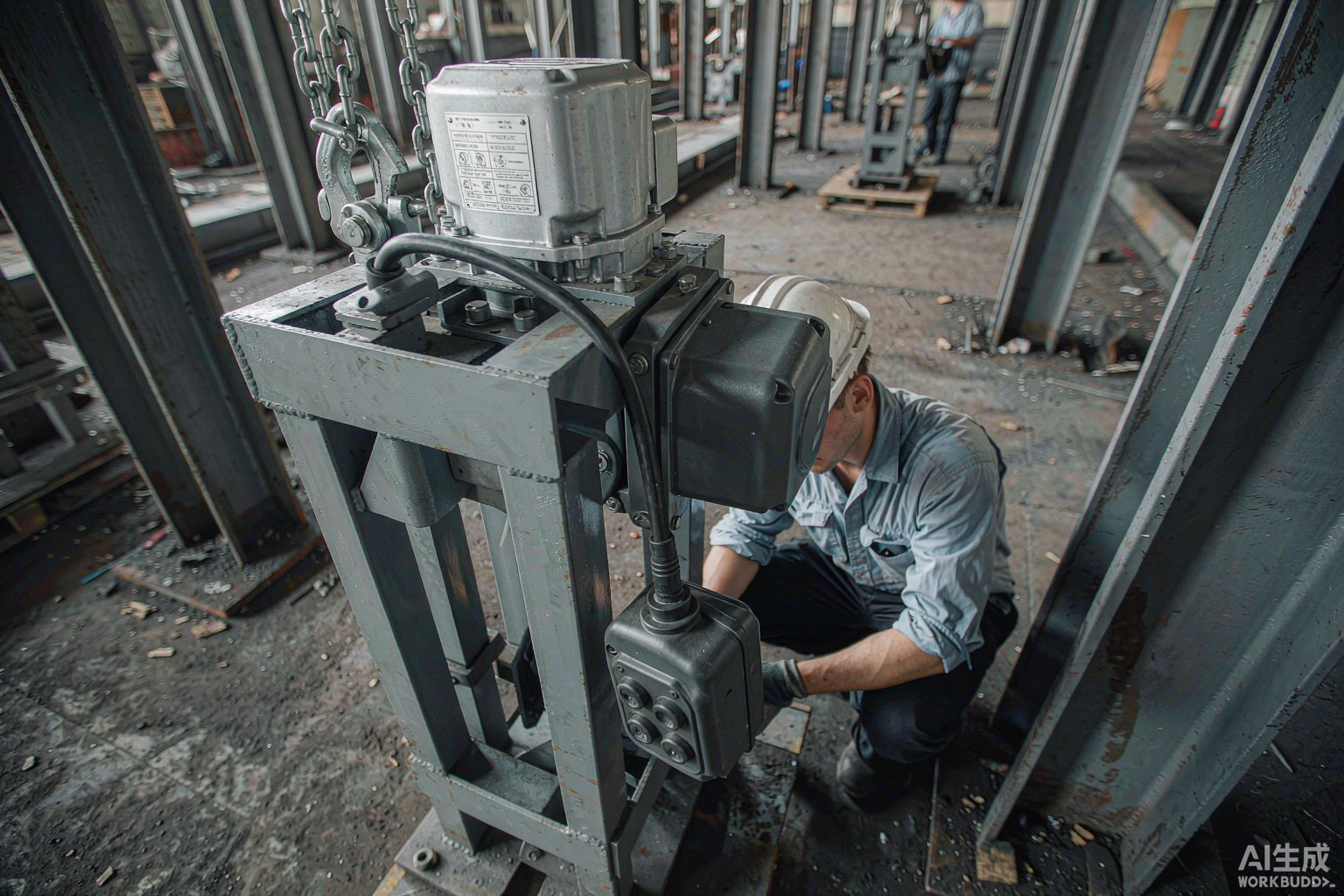
The same single-or-dual question decides the transmitter on a hoist being converted rather than replaced, which is what the chain hoist upgrade walk-through starts from.
Dual-speed adds contactors, outputs, terminals and commissioning time. It pays for itself when the machine has to do two different jobs with the same load.
Dual-speed is usually the right call when travel distances are long and the load has to arrive without swinging; when the final part of a lift needs positioning to within a few millimetres; when the same crane handles both a delicate load and a heavy one; or when the operator works close to people and needs a slow approach before a fast traverse.
Single-speed is usually enough when the hoist runs on a fixed monorail with one or two motions; when the load is always the same and the travel is short; or when the machine is a process drive rather than a lifting device. An eight-button single-speed unit such as the F21-E1B — one start, one stop and six single-speed directions, IP65, with a receiver available in AC 380 V as standard and 24 V or 220 V as options — covers a large share of electric chain hoist and single-girder work without any of the dual-speed overhead. Where the machine is already built and only the handset is being replaced, most of that difference turns out to be terminal-level rather than mechanical, which is why the crane remote control wiring diagram is worth reading before the panel cover comes off rather than after.
Read the panel before you read the catalogue. One contactor per direction means single-speed, and the remote only has to reproduce the pendant. Two contactors per direction means dual-speed, and the specification is really about receiver outputs — not about how many buttons are on the front. Confirm the contactor count, the motor nameplate and the pendant model, then choose the station size last.
If you are specifying a replacement or a retrofit and the panel is unclear, send the motion list, the contactor count per direction and a photograph of the pendant through the contact form and the S or D configuration can be confirmed before anything is ordered.
It will operate the machine, but only at one speed. A dual-speed motor needs a separate contactor input for each stage, and a single-speed receiver has only one output per direction, so the slow stage is never commanded. The result is a working crane that has lost its fine-positioning ability.
Not usually. In the F24 range the S and D versions of the same model share a transmitter, and the difference sits in the receiver logic and output count. A dual-speed three-motion crane still fits an eight-button station; the button count only rises when you add auxiliary functions.
Check the motor nameplate for two rated speeds or a pole pair such as 4/8, and count the direction contactors in the panel — two per direction confirms two stages. Watching the machine start is the quickest field check: a dual-speed hoist begins slowly before the fast stage cuts in.
The usual causes are a single-speed receiver fitted to a two-speed machine, the slow-stage outputs wired to the wrong contactor coils, or slow and fast channels swapped during commissioning. Confirm the receiver variant first, then verify each output against the drawing one direction at a time.
Rarely. Short travel and a fixed working position leave little room for the slow stage to be useful, and the extra outputs add cost and wiring for no operational gain. Dual-speed earns its place on long travel, precise landing and mixed loads.