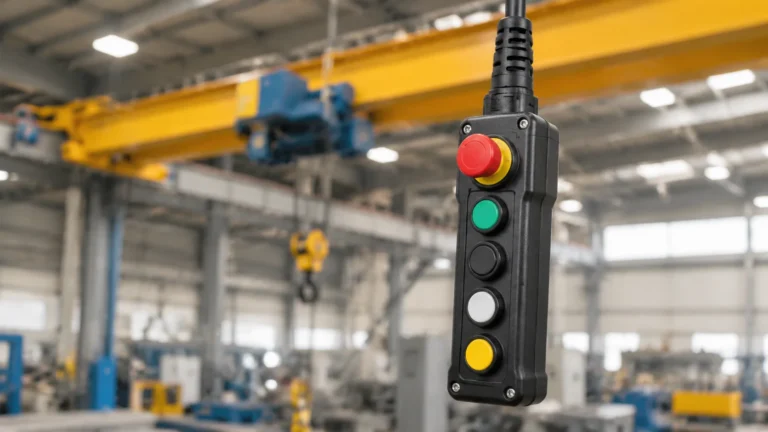
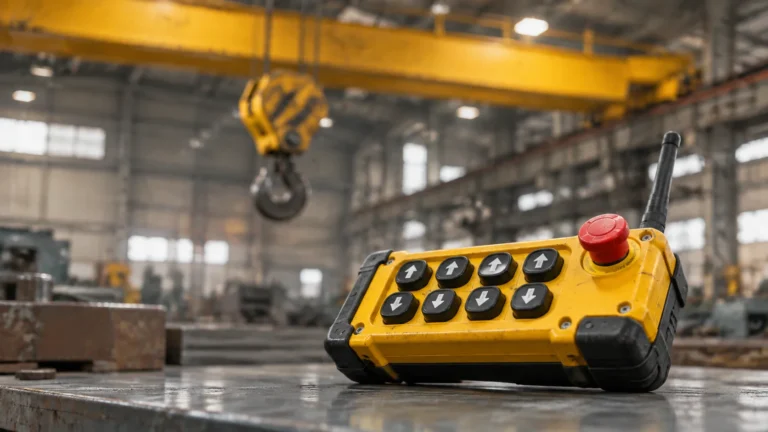
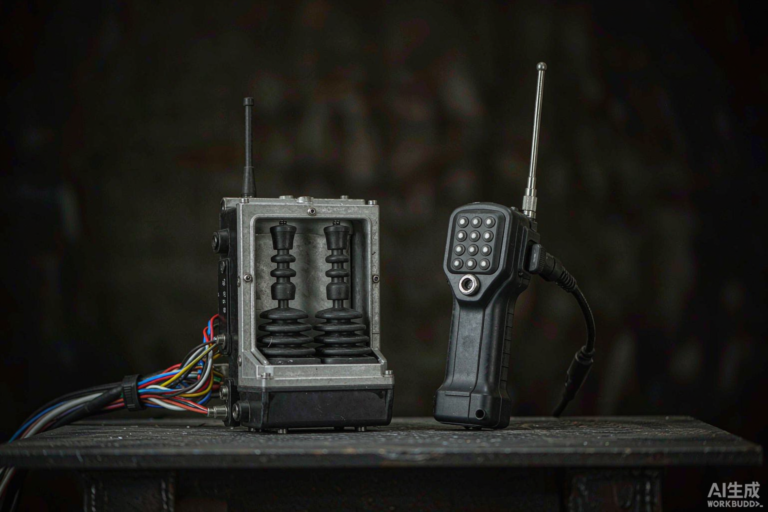
Pendant Control Station Wiring: Cores, Common, Earth
Cores follow functions, not buttons. The sum that sizes the cable, why the stop must not share the button common, and five pre-power checks.
Read More

Underground gantries are specified like surface cranes and then fail for reasons no datasheet mentions. A tunnel gantry crane remote control works inside what radio engineers call a waveguide with corners: rock and concrete reflect almost everything, absorb some of it, and create dead spots that move as the crane travels. The link is a design problem first and a hardware choice second.
A published range figure is a line-of-sight number measured in open air. In a tunnel the same transmitter may work perfectly at eighty metres and drop commands at forty, because the signal arrives twice: once directly and once after bouncing off the wall behind the operator. Where the two arrivals land out of phase they cancel, and a null appears in space. The null moves when the operator moves, which is why a handset “works here but not there” while the bench test finds nothing wrong.
Two further effects make it worse. The cross-section is small relative to the wavelength, so the field is squeezed and the antenna behaves nothing like it does outside. And the box girder itself runs the length of the tunnel, sitting between receiver and operator for much of the cycle.
The practical consequence: a coverage test beats any datasheet figure, and it has to be done over the whole travel length with the machine moving.
Three decisions come before model numbers. The band comes first: around 433 MHz bends around corners and through openings better and tolerates confined geometry, while 2.4 GHz separates neighbouring systems but loses more per metre of cable in a reflective corridor. The trade-offs are in 433 MHz versus 2.4 GHz, and underground the low band usually wins unless several cranes share one bore.
Second is whether the link is direct or distributed, which is a civil-works question settled in the enquiry rather than at commissioning. Third is antenna position: a receiver antenna inside the frame, behind a steel plate or a cable tray, is the most common cause of intermittent faults underground. It belongs outside the machine, at the highest point the profile allows, aligned with the axis of travel.
| Link approach | Best for | What it costs you |
|---|---|---|
| Direct link, one receiver, external antenna | Bores under about 150 m with line of sight along the path | Nothing beyond good antenna placement; dead spots return if the profile narrows |
| Single repeater mid-tunnel | Long straight bores, or one bend that cannot be avoided | A power and mounting point in the tunnel, plus a tuning visit |
| Radiating cable along the bore | Long tunnels, junctions, branches to several headings | Civil works and amplifiers; the most reliable option underground |
A repeater is the cheap answer: one box in the middle receives and retransmits, so the signal never makes the full journey in one hop. It works in a straight bore and badly at a junction, where the signal must turn a corner rather than travel further. The advice to place it halfway is only right when the tunnel is straight and the attenuation symmetrical.
Radiating, or leaky, cable turns the tunnel wall into an antenna. It is a coaxial design with slots in the screen that radiate along its length, and it needs line amplifiers roughly every 350 to 500 metres to hold the level. It is normally a sub-1 GHz technology, because losses above that demand so many amplifiers that a distributed antenna system becomes the better buy. For a gantry travelling several hundred metres through branches, radiating cable is the only arrangement giving a continuous field. The comparison is set out in crane remote control signal repeater options.
Whatever is chosen, insist on a coverage walk as the acceptance test: walk the full length with the crane stationary at each end, operate every motion from the worst position you can stand in, and record where commands are lost.
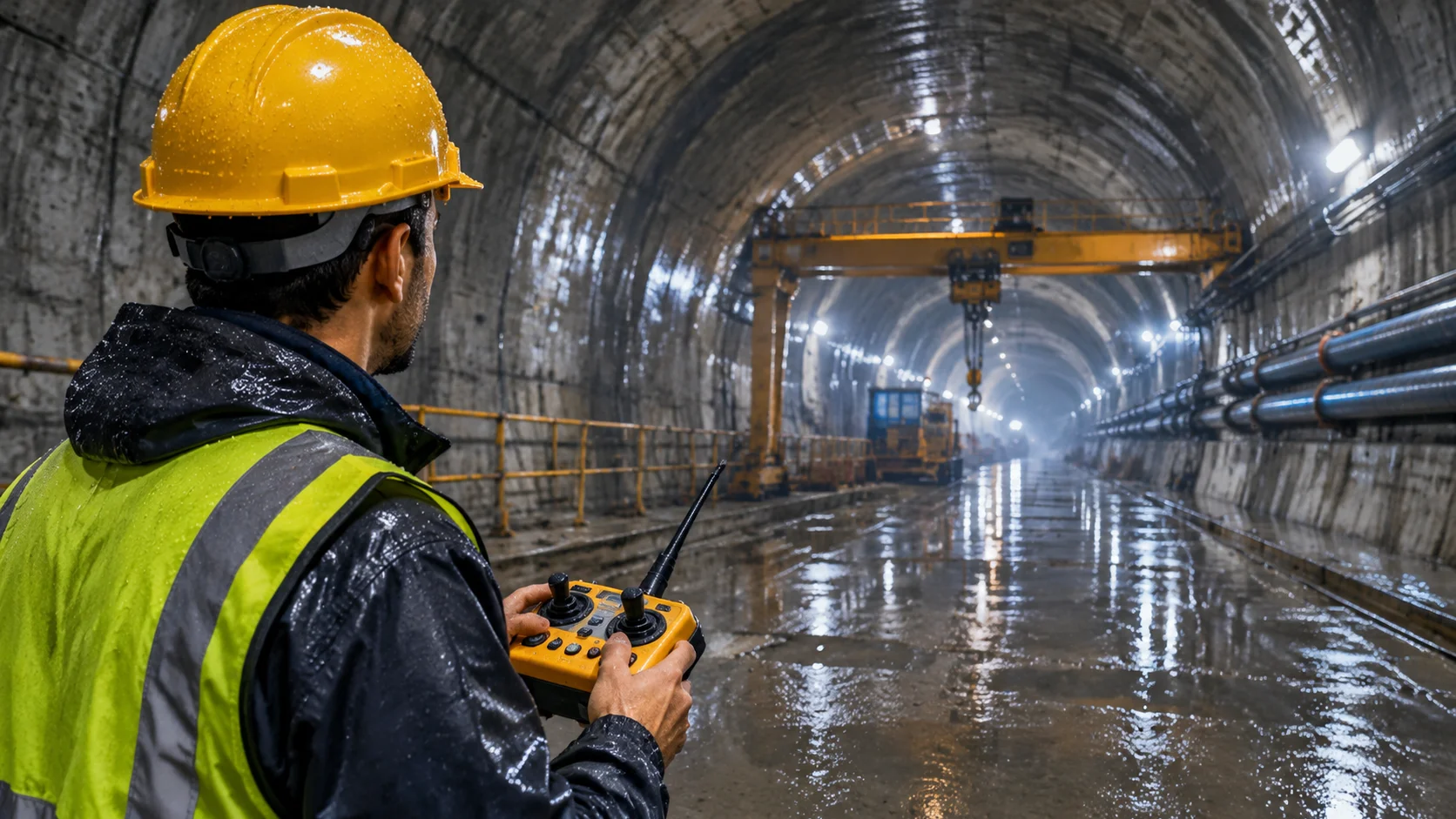
Tunnels are wet in a way surface plants are not: drip from the crown, seepage down the walls, spray from dewatering and drilling, and condensation whenever ventilation air changes temperature. The four attack different parts of the equipment, and an IP rating answers only two of them.
Drip and spray are ingress, and IP65 is the sensible floor for a receiver in a tunnel, with IP66 or IP67 where a hose is used. Condensation is different: a sealed box that is warm inside and cold outside collects water on the inside of the lid, and no IP rating prevents that. A breather membrane or an enclosure heater deals with it, and both should be specified rather than discovered.
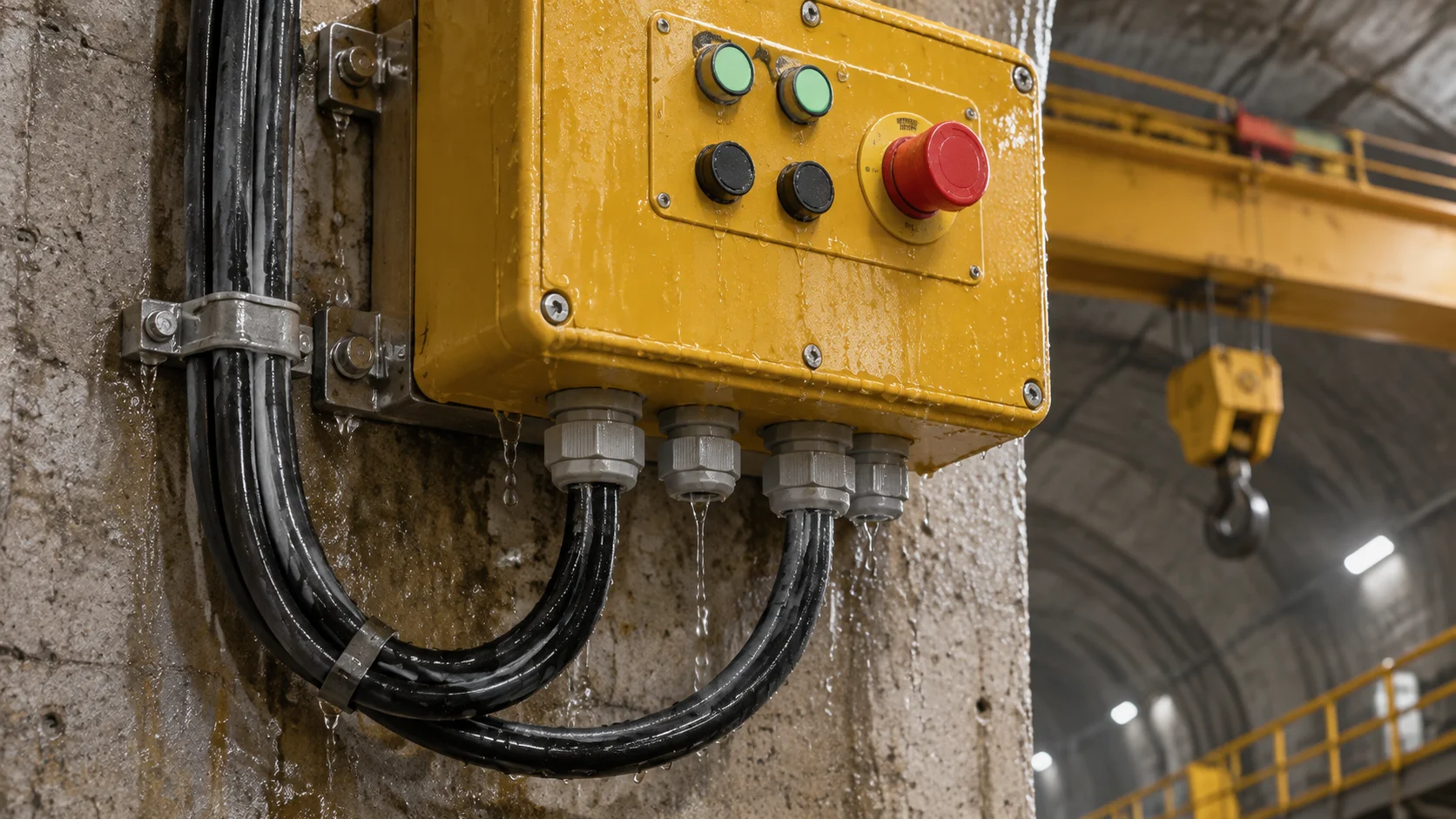
Cable entries deserve their own line in the quotation. Most water damage starts at a gland tightened onto the jacket rather than the screen, or at a cable loop running uphill into the box. Entry from below, a drip loop and a gland matched to the cable diameter prevent most first-season failures.
Underground the operator often cannot see the load, and the load handler cannot see the operator. A handset lets one person stand where the view is best, which is why the specification must define what happens when the link is lost with a load suspended.
The behaviour should be written into the acceptance test. The usual arrangement is that loss of link releases all motion outputs within a defined time and the hoist brake sets. Test it by switching the handset off with the load just clear of the floor; how far it settles tells you about the brake, not the radio. The expected behaviour is set out in crane remote control signal loss and failsafe.
A radio emergency stop stops the crane. It does not replace a local e-stop at the machine or the access point, and it does not remove the need for someone at the panel during maintenance. Lighting belongs in the specification too: a backlit handset with a clear link and battery indicator is worth more in a dim bore than an extra function button, because operators who cannot read the indicator keep working until the handset dies mid-lift.
An underground gantry is rarely alone in the bore. Fans, sump pumps, drilling rigs and access gates all share the space, and each is a candidate for an interlock a radio system can deliver without extra hardware: no travel past a point while a ventilation door is open, no travel where gas detection is in alarm, travel inhibited until an access gate is closed, slow-speed-only while personnel work in the same section. None of these need a smart transmitter. They need spare receiver outputs, an input on the crane panel and a wiring diagram agreed before the panel is built. Antenna work around junctions is covered in crane remote control antenna options.
Send five items with the enquiry and the system can be sized in one pass:
A single-hoist gantry usually lands on an eight-function wireless remote control with an external antenna; a multi-motion machine with interlocks needs the industrial crane remote control system. Both can be quoted from one contact form submission, and a drawing of the bore with the crane travel marked saves two rounds of questions.
Often yes, for a short straight bore with a clear line of sight and an antenna outside the machine. Beyond roughly 150 m, around a bend or at a junction, the link needs a repeater or radiating cable.
433 MHz copes better with confined reflective geometry and with radiating cable. 2.4 GHz suits sites where several systems must coexist in one bore and each can be separated by channel.
The receiver should drop all motion outputs within a defined time and the brake should set. Test it deliberately with the handset switched off and the load just clear of the floor.
IP65 is the usual minimum for drip and spray; IP66 or IP67 where hoses are used. Condensation needs a breather membrane or heater, which no IP rating provides.
Yes, if the receiver has spare outputs and the panel has matching inputs. Agree the logic before the panel is built and include each interlock in the commissioning test.